The most important fact about Venter’s achievement

If not the most important fact about what Craig Venter did is not that it raises ethical questions or anything like that (the questions are overblown anyway). Instead, it’s that what he did was a massive technical feat. It’s long, long, long been known that what he did was possible in theory. Everyone expected it to work. The problem was in making it work. That side of the problem came with different expectations. Almost certainly someday, yes, we ought to be able to synthesize a genome and insert it into a cell, but today? Could Venter’s team do it successfully using such a length of base pairs? The answer is yes, but that wasn’t always clear.

While I’m at it I suppose I can point out two more huge facts: first, the organism has no parents. It was not conceived sexually or replicated asexually. It is a product of pure chemistry, and that tells us something about the cell. Second, this achievement means we can go into a computer, change a few amino acids, and come up with completely different gene products. The first application may well be for industrial use (wouldn’t it be great to produce bacteria that just love to eat up oil spills?). I suspect another major application will somehow involve cancer treatment. The creation of an enzyme which makes it more difficult for cancer to recruit blood vessels (angiogenesis) or which reduces some other product cancer brings about for its own perpetuation may be the next big revolution in the so-called “War on Cancer”.

‘Stop trying to play God!’

There’s a lot of empty rhetoric floating around in light of the immense achievement of Craig Venter. Most of it is coming from anti-science conservatives, as one might expect. The Catholic Church is no exception.

Another official with the Italian bishops’ conference, Bishop Domenico Mogavero, expressed concern that scientists might be tempted to play God.

“Pretending to be God and parroting his power of creation is an enormous risk that can plunge men into a barbarity,” Mogavero told newspaper La Stampa in an interview. Scientists “should never forget that there is only one creator: God.”

“In the wrong hands, today’s development can lead tomorrow to a devastating leap in the dark,” said Mogavero, who heads the conference’s legal affairs department.

What makes this interesting is that the Church keeps urging caution for where this will all lead. But if they think Venter is playing God, then we already have a good answer: it will lead to terribly designed organisms which have a lot of junk, non-sense organ routes and parts, and which are bound to the mistakes found in their ancestors – unless of course we keep failing and cause 99% of everything we create to go extinct.

Craig Venter wasn’t lying

Craig Venter is a brilliant scientist who has been working tirelessly to create life in the lab. In recent years he has been really pushing that the event is getting close. It looks like he has made a huge technical step.

Craig Venter has taken yet another step towards his goal of creating synthetic life forms. He’s synthesized the genome of a microbe and then implanted that piece of DNA into a DNA-free cell of another species. And that…that thing…can grow and divide.

Anyone who has worked with DNA for more than 30 seconds can appreciate at least some of the difficulty entailed in such a feat. Most DNA falls apart after a few thousand base pairs using modern molecular techniques of replication. Even with PCR and the use of a high-grade enzyme like Taq, no one sets out to copy something too terribly long. (And depending on what the DNA is needed for, it may only be necessary to replicate a few hundred base pairs – a fairly common event.) So Venter and his team used bacteria and yeast as major components in their synthesis instead. What they created is more or less a copy of a genome of an organism that already exists, but the important aspect here is the transfer of the synthesis into the cell. That’s the major technical feat that’s going to act as the next step in Venter’s quest to create artificial life.

Thought of the day

It seems like the key to becoming an effin’ huge example of marine life is to just eat a bunch of plankton.

Via Jerry Coyne

Because it’s worth repeating

A creationist in one of the comment sections recently repeated this old canard.

the dictionary says (among other things) that a theory is:
1. contemplation or speculation.
2. guess or conjecture.

there i go? again?
you just seem pretty intent on disparaging arguments but not refuting them.

This is yet another point where atheists and other non-deluded people are willing to be honest, all the while watching creationists do just the opposite. It’s like it’s just so damn inconvenient to come to a straight-forward, truthful understanding of basic concepts for the religious that lying has become okay for them; the ends justify the means.

So it is worthwhile to repeat, for the nth time, just what a theory is and is not.

Insofar as my theory that ice cream is great can be considered a theory, yes, creationism is a theory. But it is not in any way a scientific theory. The requirements to reach this high level are rigorous. For starters, what predictions does creationism make? What experiments can be carried out to falsify the hypothesis? Can others repeat these experiments? Are there other plausible explanations? Are there better explanations?

The word “theory”, as any educated, honest person knows, carries far more weight in science than it does for the lay public. In truth, the word gets mixed up in casual talk within science, even sometimes becoming conflated with “hypothesis”, but no one really blinks because the context allows for the use of shorthand. Think to Richard Dawkins’ style of writing. He uses personification all the time, especially when discussing natural selection. He will start out with qualifiers and scare quotes – “Natural selection ‘wants’ to weed out the bad genes” – but as he goes on, the reader comes to an understanding of the fact that the good doctor is bringing evolutionary biology to life via a particular way of writing. It becomes obvious that it is inappropriate to apply anthropomorphic qualities to what Dawkins is describing – and it is context that allows for this.

But in public forums or political circles, there can be no assumed knowledge of science and what its terms mean; it is a danger to allow for the use of loose language without qualification. That is why it is so important to distinguish between the lay definition of “theory” versus its scientific definition. In science it references something which has evidence, has been tested, has journal papers all about it, and usually there is a high degree of consensus. The Big Bang, evolution, global warming, plate tectonics – these are all theories. Creationists have no theories. They have no evidence, no reason, no logic, no testing, no raw data, no way to interpret any sort of observation in a way that holds any scientific significance.

Gene therapy for mouse vision

Gene therapy is generally a good thing. Just last year it was used to cure color blindness in spider monkeys. In that instance, an adeno-virus was used to deliver the correct gene into the primates; that’s often how it is done. However, there are drawbacks to this. For instance, insertional mutagenesis may occur. This is where an inserted sequence causes a change in the expression of a nearby gene. In many cases, this will cause cancer. It doesn’t always happen and not all viruses will be the right kind to integrate themselves into the host’s genome, but the possibility is a very real one. Fortunately for the spider monkeys, no side effects have been noted.

Another way to go about fixing faulty genes is to do what Cai et al. did and deliver the correct DNA via nanoparticles. They injected mice which had retinitis pigmentosa, a disease of the eye, with saline, naked plasmid DNA (i.e., not compacted in a nanoparticle), and with nanoparticle compacted DNA (plus a control group that received nothing). The correct gene, the Rds gene, did nothing when it was given alone (and, of course, the saline did just the same). However, the nanoparticle DNA did prove to have an effect. In fact, not only did it retard further degeneration of vision, but it even caused healing in the form of functional and structural improvements.

There are still safety issues that need to be fleshed out with more research, but this method of correcting faulty genes is both promising and pretty exciting. What’s more, it even has opened the avenue for some good zingers.

“Making the blind see was once called a miracle,” said Gerald Weissmann, M.D., Editor-in-Chief of The FASEB Journal. “As we have expanded our understanding of evolution, genetics, and nanotechnology, chances are that “miraculous” cures will become as commonplace as those claimed by faith-healers past and present.”

1. X. Cai, S. M. Conley, Z. Nash, S. J. Fliesler, M. J. Cooper, M. I. Naash. Gene delivery to mitotic and postmitotic photoreceptors via compacted DNA nanoparticles results in improved phenotype in a mouse model of retinitis pigmentosa. The FASEB Journal, 2009; DOI: 10.1096/fj.09-139147

Corrections, corrections

In my post about microsatellites and mitochondria there were a few errors. Fortunately, the author of the paper that formed the basis for a large portion of what I wrote also happens to be my professor. I petitioned him for review:

I stated that mtDNA is powerful as a tool for determining relations within a species. It should have read that mtDNA is useful for determining certain evolutionary patterns. There’s little excuse for this mistake.

I said genetic variation as determined by microsatellites is an indicator for population health. This may be true, but it isn’t possible to really be sure. If natural selection is acting upon these points, then populations with more variation may have better fitness.

I stated that populations are managed via arbitrary geographical lines. I actually meant political lines, but it’s unclear if that is true. This depends upon the level of coordination in management and conservation between the U.S. and Canada, and precisely where the borders fall. More on this later. Update: The political lines largely follow the geographical divides. There is some overlap, but it is minor.

I’ve also corrected some minor language here and there, as well as a citation (the paper I used was from 2004, not 2003). All the updates can be reviewed on the original post.

Thanks to Chris for his help.

Climatic facts

Oh, gee, weird. It turns out Phil Jones’ data wasn’t made up and the world is still warming directly due to human activity.

The House of Commons’ Science and Technology Committee said they had seen no evidence to support charges that the University of East Anglia’s Climatic Research Unit or its director, Phil Jones, had tampered with data or perverted the peer review process to exaggerate the threat of global warming — two of the most serious criticisms levied against the climatologist and his colleagues.

One [email] that attracted particular media attention was Jones’ reference to a “trick” that could be used to “hide the decline” of temperatures.

“Hide the decline” was not an attempt to conceal data but was scientific shorthand for discarding erroneous data, the committee concluded. Similarly, Jones intended “trick” to mean a neat way of handling evidence, rather than anything underhanded, the inquiry found.

I found this part to be the most frustrating. The term “trick” was explained over and over to people, but with such little success. The reason, of course, is 1) the intense desire conservatives have to allow corporations to pollute more and more and 2) the general hostility conservatives have towards science. Methinks they would be appalled to read an average scientific paper. “What?! They adjusted for sample size difference?! IT’S FAAAAAKE!”

BRCA1 and BRCA2 patents struck down

For years private companies have been putting patents on your genes. In fact, roughly 1/5 of human genes has been patented. This potentially has huge ramifications as it can restrict research abilities to one company or at least make others wary of future pursuits. Fortunately, a federal judge has struck down much of this practice.

The decision by U.S. District Judge Robert Sweet challenging whether anyone can hold patents on human genes was expected to have broad implications for the biotechnology industry and genetics-based medical research.

Sweet said he invalidated the patents because DNA’s existence in an isolated form does not alter the fundamental quality of DNA as it exists in the body nor the information it encodes.

He rejected arguments that it was acceptable to grant patents on DNA sequences as long as they are claimed in the form of “isolated DNA.”

The specific genes this primarily affects are the BCRA1 and BRCA2 genes, both tumor suppressors. (That means damage to these genes can quickly lead to cancer.) These are highly important areas of research which women cannot afford to have restricted to one company. The ruling will surely be appealed, but it is encouraging to see the case go in this direction.

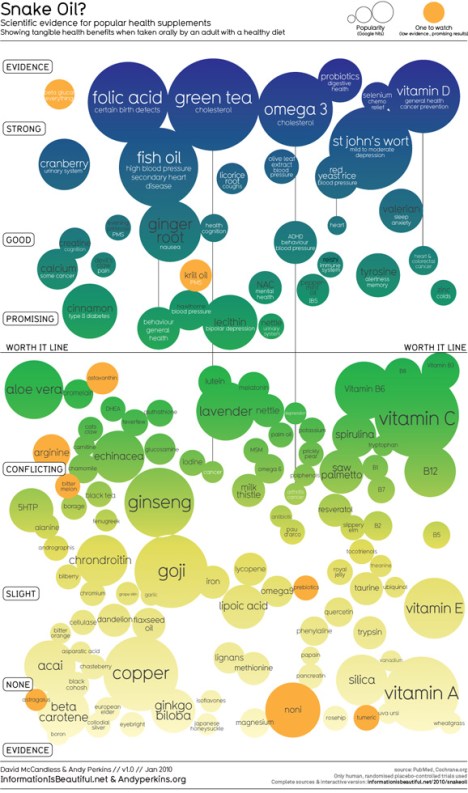
Snake oil?

Interactive map here.