Circumcision as a public health policy

At this point it has been established that circumcision reduces female-to-male HIV transmission rates by around 60%. Like it or not, the science is in. Now the question has shifted to being about why it reduces transmission, as well as how we can best introduce circumcision has a public health policy. On the first point, the general answer is that the foreskin is a relatively large surface area subject to tearing and softer (non-keratinized) skin. On the second point, though, I wasn’t aware of any actual policies in place to save the lives of men and women in regions particularly vulnerable to the spread of HIV. As it turns out, multiple sub-Saharan countries have undertaken measures to dramatically increase circumcision rates – though much work is still required:

Zambia is still 75 per cent short of its target of two million circumcisions by 2015. So is Uganda, having completed 1.5 million towards its 4.1 million target. Kenya has achieved its target in numbers – but not among the “right” men.

The donors who are pouring cash into male circumcision following the landmark 2006 study which showed that it reduced the risk of HIV infection by 60 per cent, have neglected a crucial factor – the attitude of women.

A man who gets circumcised is often viewed as a man who is looking to sleep around as much as possible. And, indeed, this has become something of a problem, as HIV rates in some areas have remained steady. This may also be due to men not waiting the necessary 6 week healing period – 40% of newly circumcised men had sex while still healing, actually resulting in an increase in their likelihood of contracting HIV. Furthermore, we may be seeing the problem of moral hazards at play. This is where risk is reduced for one thing or another, so people are less cautious in return. Some examples are playground materials and car safety. In playgrounds, children are often getting hurt as much if not more than in previous years because they’re playing on soft wood chips or rubber, leading them to believe they can fall harder and get hurt less. With cars, safety has greatly increased and deaths have fallen, but accidents remain steady or on the rise. People with seat belts are willing to speed more than those without them.

But the real problem in these sub-Saharan nations is a lack of education and peer support:

Carol Musimami, one of 30 “technical advisers” who counsel the men, said: “You will see the older ones come after dark. They don’t want to be with the youth. We are targeting the 25 to 35-year-olds –they are the ones with the money, they buy the women, they are exposing themselves [to infection]. But they are hard to get. They don’t want others to know,” she says.

Leadership is key. In Kenya, the circumcision programme in Nyanza province in the west – one of the three centres in the landmark 2006 trial that proved its effectiveness – was faltering when Raila Odinga, the Prime Minister and a member of the non-circumcising Luo tribe, responded to protests from tribal elders fearing the loss of their identity by declaring: “We don’t lead with our foreskins, we lead with other faculties. This is a medical issue.”

The speech, in 2008, proved a pivotal moment and more than 500,000 Luos have since been circumcised.

This is a major issue in global health. Science can find all sorts of answers to major problems, but that doesn’t mean it’s all just a matter of policy implementation after that. For instance, Jimmy Carter and WHO launched a campaign to eradicate Guinea worm disease in 20 African nations in the 1980’s. The primary approach to this was to make sure people had clean drinking water. With funding, wells were built and larvacide was added. However, one of the biggest pushes was to get people to drink clean water was to give them simple cloth filters. Unfortunately, this came with two problems. One was simply logistical: the filters clogged. The other was that the cloth material was too aesthetically pleasing, so people would often use them as decorative items. When the Carter Center, Precision Fabrics, and DuPont worked together to distribute plain nylon cloth filters (and education), the problem quickly shrank. There were 3.5 million cases of Guinea worm disease in 1986. As of 2005, the number had dropped to 11,000. This underlines the need for cultural understanding in addition to the simple cold science of the matter. Greater peer interaction and promotion of circumcision may be the key in getting places like Zambia to that 2 million goal.

At any rate, I’m very pleased to hear about these ongoing efforts to spread circumcision in developing nations in order to curb the spread of HIV. This is a triumph of common sense, global health initiatives, science, and basic humanity.

Tricky marketing

A show on the National Geographic Channel called Brain Games has a good track record of exploring and explaining how our brains work, especially in every day circumstances. It’s probable that a good deal of why they work how they do has an evolutionary basis, but it’s also likely that some of their operation is simply incidental, an accident of our emergence from the jungles to the savannah to civilization.

One of my favorite episodes is called “Power of Persuasion”. It’s all about how marketers and advertisers get you to think what they want you to think. The show conducted an experiment (for which there was already ample, controlled evidence) where they sold popcorn to unsuspecting movie-goers. The first set of movie-goers was given a choice between a $3 small bucket and a $7 large bucket. Even when prodded to go for the more expensive choice, most people chose the $3 bucket. When interviewed later, people said they felt like $7 was way too much, and besides, the smaller bucket was more than enough anyway. The second set of movie-goers, however, was given a different set of choices. In addition to the $3 and $7 buckets, they had the option of a $6.50 medium bucket. Many of the patrons chose the medium bucket. When they did, the person behind the counter asked if they wanted to upgrade to the $7 bucket. After all, it was only another 50 cents. A significant percentage of people took the bait, purchasing the large bucket. In their interviews, they said it seemed like they were getting a better deal. Even while making the purchase, some could be heard saying, “Well, it’s only another 50 cents.” People believed they were getting a better deal.

What underlies this exercise is that an extra data point was introduced. In the first scenario the information was limited. Regardless of the price per ounce (which wasn’t given), the $7 bucket was well over twice the price of the small, but it certainly didn’t appear to be twice as big. The perception of the large bucket’s value was low. However, people in the second scenario had a third data point. The small bucket may have still been the best deal, but the $6.50 bucket normalized the prices on the higher end. The $7 bucket’s price was still over twice the price of the small bucket, but it was relatively close in price to the medium bucket; two of the choices had similar prices, so the highest price no longer seemed so extreme. Then when given the choice to spend a relatively small amount more (50 cents), the most expensive bucket seemed like a downright deal.

Now think to all the times you’ve done this. When you look into buying an item, are you only looking at the quality? Or are you looking at the value you’re getting? How often have we all opted to buy the medium-priced item because we don’t want something cheap, but the highest priced items are too much? And how often have we allowed ourselves to spend just a little more because the next product level was so close to what we were willing to spend on a slightly inferior item? I don’t know about you, but I think about this every time an employee at my local cafe asks if I want to upgrade from a medium to a large for just another 30 cents. It seems like a good deal, and maybe it is, but do I actually want more chai tea or do I just want more value?

Fresh vs frozen food

As someone with food snob friends, I find this incredibly satisfying.

New warning labels for junk alt-med vaccines

The alt-med crowd is notoriously anti-vaccine despite the high level of safety of vaccines – even despite how many lives vaccines save every year. Real medicine being so effective against what were once devastating, wide-spread diseases just doesn’t fit the alt-med narrative. Yet does that stop them from peddling their own ‘vaccines’? Of course not. And would you believe it? Their vaccines aren’t even effective:

Health Canada is cracking down on the sale of so-called homeopathic vaccines that are falsely promoted by some naturopaths and homeopaths as safer and more effective than traditional vaccines.

The department has altered the document that outlines how homeopathic vaccines should be used, saying they must now contain the following warning: “This product is not intended to be an alternative to vaccination.” The document, called a product monograph, was updated June 24, one month after The Globe and Mail published a story outlining the concerns with homeopathic vaccines.

“We’re very glad … they’ve taken this step,” said Jamie Williams, executive director of Bad Science Watch, a Canadian advocacy organization that led a campaign against homeopathic vaccines. “We feel that it will be a help to consumers who might not have been getting the full information to make a more informed health choice before this.”

But what’s in these so-called vaccines, you ask? Well, ultimately nothing. But they made sure to take a gross path to that nothing:

Homeopathic vaccines, also known as nosodes, are made from infected saliva, feces or other material. The substance is mixed with alcohol and diluted until it is harmless, according to the homeopathic and naturopathic practitioners who sell the products. They say nosodes produce an immune response and that research shows it protects as well, if not better, than traditional vaccines.

In other words, they disinfect some feces or spit before essentially filtering it back to water. Anyone looking to imbibe this malarkey would be better off spitting into their Brita water filter and drinking the purified water that comes out. At least then they would have a water filter in addition to having wasted their time. And as for what research shows? It’s a lie. People who promote this sort of quackery cite poorly done studies with a tiny number of participants; the studies are never replicated and they never appear in any journal with any dignity. It’s all agenda-driven drivel that, in the end, makes the homeopath a butt-load of undue money. Take this advice from Jamie Williams, executive director of Bad Science Watch:

“Do not listen to somebody in a health store who’s trying to sell you $30 worth of sugar pills,” he said.

Richard Dawkins on postmodernism

This is hilarious.

Fun fact of the day

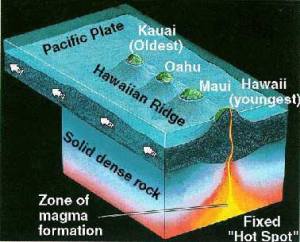
Take a quick look around a world map and you may just figure out the location of a magma hot spot. The island chain of Hawaii, for example, was born via this way. Hawaiian Islands As the Pacific plate moves, hot magma beneath the Earth’s crust pushes through, forming new land over millions of years. This process has given us the 4 main Hawaiian land masses in addition to well over a hundred tiny islands. Other areas of the world where we see this include the Galapagos islands and the peaks of Kilimanjaro.

Fun fact of the day

As the Earth rotates, the Sun appears to rise over the horizon. As its rays become more and more directly overhead, there is less distance for them to travel through the atmosphere in order to reach us. (This longer travel is what creates wonderful sunrises and sunsets; light is refracted at a greater rate, allowing us to see a variety of frequencies and thus colors.) Keep this in mind if you like to tan. It’s best (i.e., healthiest) to catch your rays in the morning and evening since less ultraviolet light can reach you.

And, as always, don’t believe the quacks who say sunscreen is bad for you. If you’re tanning in the middle of the day, wear it. Cancer is bad, ya know?

A victory for science at the Supreme Court

In the most “duh” decision in who knows how long, the Supreme Court ruled today that large, profit-driven corporations (or anyone, for that matter) cannot patent naturally occurring genes:

Pronouncing what may seem like a patent truism, the Supreme Court ruled unanimously on Thursday that biotech researchers have to create something to get monopoly protection to study and apply the phenomenon. Because Myriad Genetics, Inc., “did not create anything,” the Court struck down its patent on isolating human genes from the bloodstream, unchanged from their natural form. Because Myriad did create a synthetic form of the genes, however, that could be eligible for a patent, the Court concluded.

The decision was a major blow to a company that believed it had a right to be the sole user and analyst of two human genes that show a high risk, for women found to have them in their blood, of breast and ovarian cancer.

This is a huge win for science, future research, and, frankly, human lives. Aside from the obvious dubiousness of patenting something that isn’t man-made, it was unconscionably unethical for Myriad Genetics to pursue this case at all. They should feel nothing but shame and moral grief at the human life they were inherently putting at risk. This was a rare excellent decision from the SCOTUS. (Surprisingly, they didn’t randomly and arbitrarily decide, for no discernible reason whatsoever, to also declare that any of the genes involved were people.)

Why we need better science education

Some better science education could have entirely avoided this ridiculous situation:

Florida country radio morning-show hosts Val St. John and Scott Fish are currently serving indefinite suspensions and possibly worse over a successful April Fools’ Day prank. They told their listeners that “dihydrogen monoxide” was coming out of the taps throughout the Fort Myers area. Dihydrogen monoxide is water.

The popular deejays are mainly in all this trouble (potentially of a felony level) because their listeners panicked so much — about the molecular makeup of their drinking water, however unwittingly — that Lee County utility officials had to issue a county-wide statement calming the fears of chemistry challenged Floridians…

Every break we have we’re telling listeners it was a goof, a bad joke,” Tony Renda, general manager at WWGR radio told WTSP-TV. And apparently, the station, the water works, and perhaps the authorities are still trying to figure out if the two hosts could face felony charges for, again, reporting that the scientific name of water was coming out of the pipes. “My understanding is it is a felony to call in a false water quality issue,” Diane Holm, a public information officer for Lee County, told WTSP, while Renda stood firm about his deejays: “They will have to deal with the circumstances.”

Yes, and the rest of us will have to deal with the consequences of a scientifically illiterate society.

Should we ask our politicians specific science questions?

Every time a politician is asked if he believes in evolution or how old he thinks Earth is, there is the inevitable complaint from the right: “It’s a gotcha question!” It’s as if to say the whole point is to make certain people, usually Republicans, look stupid during their run for public office. I’ve got to disagree, though.

I find these sort of questions to be valid for at least two reasons. First, it gives us a very general idea of the background of the person. Someone who says he rejects the fact of evolution is almost certainly a young Earth creationist, and I think that’s important to know. (It’s important even if he’s an old Earth creationist.) We expect just about every politician in the U.S. to express some religious piety (unfortunately), but it’s hard to believe at least a few them aren’t mailing it in. The ones who actively reject significant fields of science, though, are probably sincere. I want to know that so I can be confident in my vote against them.

Second, this can give us a general gauge on intelligence. Now, I’m not saying people who reject evolution or global warming or any other scientific fact are stupid. I wouldn’t be so clumsy as to play into such an atheist caricature. What I’m saying is we can get a grip on the scientific literacy of a person based upon some of these questions. Of course, this is sort of a one-way street: A person who reject science can be deemed to have low literacy, but a person who accepts the facts of a few key issues is not necessarily engrossed in science. Regardless, these questions do often correlate with other facts in a useful way. For a prime example, look up anything the likes of Sarah Palin has said about fruit fly research and funding.

I think people should have a pretty good idea about a lot of theses issues, such as evolution or the age of Earth, but even if they’re ignorant, that’s no crime. If someone running for office is asked how old the world is and he doesn’t know the exact number, it would suffice to say something like, “Millions or even billions. I’m not sure.” He would get corrected, but no one would make that big of a stink about it. The stink only arises when a politician starts spouting off things about 6,000 years and ‘no missing lin’k. There’s just no excuse for that sort of stuff.