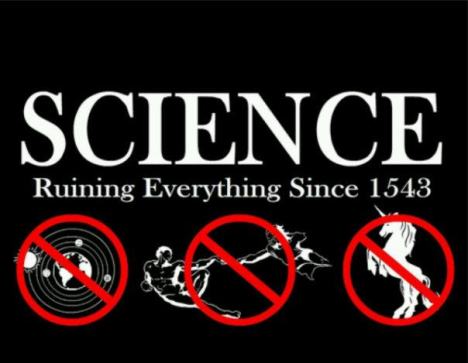
HPV vaccines do not lead to greater sexual activity

For quite some time now we have been hearing counter-common sense arguments that claim the administration of HPV vaccines will make young girls more likely to engage in sexual activity. One recent study shows those arguments to be bogus:

Adolescent girls who get the human papillomavirus (HPV) vaccine are no more likely to show signs they may be engaging in sexual activity than girls who do not get the vaccine, according to a new study that challenges a widely held belief…

Researchers from Emory University in Atlanta followed electronic data of nearly 1,400 girls aged 11 and 12 between July 2006 and December 2010 to see whether they received at least one dose of the vaccine within the first year and whether they were later counseled about contraception, acquired a sexually transmitted disease or became pregnant.

More than a quarter of girls ages 15 to 17 report being sexually active, according to the CDC.

The study followed the girls to the age range where sexual activity would have been initiated, according to the researchers.

The nearly 500 girls who received at least one dose of the vaccine were no more likely to be diagnosed with a sexually transmitted disease, discuss contraception or become pregnant than the nearly 900 girls who did not get the vaccine, the study found.

“We couldn’t directly look at sexual activity, so we looked at external outcomes that would suggest sexual activity,” said Dr. Robert Bednarczyk, clinical investigator with the Kaiser Permanente Center for Health Research Southeast, and lead author of the study.

The sort of arguments that inspired the above study are of the same sort that inspire studies which show that abstinence-only education is an abysmal failure. Again and again, social conservatives and overly worried parents will claim or wonder if the exposure to greater information will cause their children to become sexually active at a young age. Only the wonder is justified; over and over we are seeing that access to proper information and sound medical protections are the correct path to take.

David Pogue is fantastic

Every so often David Pogue, a technology writer for The New York Times, will host an episode of NOVA, now in its 40th season. He is routinely excellent at the job, so it comes as no surprise to me that he is now the season 6 host for NOVA scienceNOW. (Neil deGrasse Tyson hosted last season.) The primary difference between the two shows is that the former explores a single issue whereas the latter looks at a general question and goes from there; it’s sort of like the difference between a research paper and a review paper. For instance, the episode of NOVA scienceNOW I watched earlier tonight asked what makes us human. It then looked at the evolution of language, tool making, and even the different ways the great apes laugh. (Surprise, surprise, the vocalization and style of laughter amongst our ape cousins gets closer to sounding human as they get closer to us in genetic relatedness.) On the other hand, I currently have a new episode of the original NOVA in my DVR that is all – and specifically – about viking swords.

I have found myself enjoying NOVA scienceNOW (and regular NOVA) regardless of the host, but it definitely helps that David Pogue is signed onto this season. I think he does a great job and I look forward to seeing him more.

Science does not require faith

It requires assumptions:

Sometimes you will hear that “science requires faith,” for example faith that our sense data are reliable or that nature really obeys laws. That’s an abuse of language; science requires assumptions, just like anything else, but those assumptions are subject to testing and updating if necessary. If we built theories on the basis of our sense data, and those theories kept making predictions that turned out to be wrong, we would examine and possibly discard that assumption. If the universe exhibited a chaotic jumble of non-lawlike behavior, rather than falling into beautiful patterns, we would abandon that assumption as well. That’s the most compelling thing about science: it always stands ready to improve by casting out an old idea when the evidence demands it.

~Sean Carroll, via The A-Unicornist.

Fun fact of the day

About 50 million years ago, the area that is now known as Egypt was covered with an ancient sea. At the bottom of this sea were nummulites, a genus of small seashells made of calcium and carbon. Over millions of years, these creatures would die and stack up on the ocean floor, eventually creating limestone. Fast forward to human civilization and we see this:

This image comes from a limestone quarry near Cairo – the same sort of quarry that the ancient Egyptians used to build the pyramids and other structures of that great civilization. In other words, there is a homogenous mix of fossils that can be found all throughout one of the 7 Great Wonders of the World; the Egyptians owe much of their incredible accomplishments to deposits laid down by dying marine creatures over 50 million years ago.

Circumcision again: Jesse Bering is not a careful reader

I have written about circumcision at length in three different posts and their subsequent comment sections. The latter two were discussing PZ Myer’s irresponsible statement that the ‘evidence vanishes with further studies’ concerning the effectiveness of circumcision as a means of preventing HIV and other disease transmission. To quote from my most recent post:

So now the only question that remains is, When is PZ Myers going to recant his blatantly and irresponsibly false statement where he said that health benefits of circumcision vanish with further studies?

In other words, it is my position that circumcision is an effective means of HIV prevention during heterosexual intercourse; my posts and subsequent comments attest to this position.

This leads to a weird accusation from Jesse Bering, PhD:

One can either listen to outspoken atheist bloggers who can’t seem to understand that this is no longer a religious or cultural issue, the overwrought intactivists attempting to intimidate new parents through strong rhetoric and graphic images of botched circumcisions, the endless stream of nosy polemical parents who are happy to share their judgmental attitudes, or one can take the advice of those who, you know, actually know what the hell they’re talking about.

First, “either” implies one of two things, not one of four things. Second, the fact that I am an atheist is 100% irrelevant to the matter. Third, I don’t think Bering even bothered to read my post. If he did, he would know that I said absolutely nothing about the religious or cultural aspects of circumcision. The closest I came is in the comment section when I voiced that I am against non-medical personnel (such as Rabbis) performing the minor surgery. (If the Rabbis happen to also be medically qualified to perform the procedure, then I don’t have a problem with them doing so.) Beyond that, I discussed the medical benefits of circumcision.

Of course, since Bering hardly read the post he cited, I don’t expect that he read my first post (linked above) about circumcision. If he did, he could at least have a plausible basis for his accusation that I see this as a religious and cultural matter. However, that basis would quickly disappear when he realized (or when I had to point out to him) that I think religious arguments for circumcision “suck” and that my response to arguments from tradition is “So what?” This has always been a matter of science for me. Only someone who doesn’t bother to read carefully would claim otherwise.

What makes this whole thing so bizarre, though, is that Bering and I don’t even disagree. Anywhere. Look at this argument:

All else being equal…any dubious benefits derived from religious, social, hygienic, or aesthetic reasons are clearly outweighed by the costs of male circumcision.

In other words, until the recent body of evidence began to emerge, the previous reasons for circumcision were not good enough. As Bering said and as I agree, the arguments from previous generations “were almost always unconvincing”. Bering, of course, goes on to demonstrates that there now is ample evidence in favor of circumcision. (And, of course, I agree.) He then says,

Many of our parents, it seems, may have actually made the right decision for the wrong reasons.

You mean to tell me that reasons of tradition and religion weren’t the right reasons? That we need solid science behind these sort of decisions? That the primary focus of any argument in favor of or against circumcision should be based upon the mounds of available data? Guess what? I agree.

It would be one thing if I had some typo that made a major difference in one of my arguments or if I communicated my position poorly. The fact, though, is that I did neither of those things. I have been crystal clear: The decision to circumcise a child or not should be based upon scientific evidence; to base such a decision on religion or culture may result in the right decision, but it would be entirely irrelevant to the question at hand – that right result would be “for the wrong reasons”.

I’ll make a new post when a retraction occurs.

Marijuana, new evidence, and changing views

I haven’t written about the legalization of marijuana very much on FTSOS, but I have long been in favor of it. No study has ever established a causative link between marijuana and cancer (or any other major disease), and I don’t think it is particularly detrimental to society to allow people to smoke it. Moreover, criminalizing the plant only creates an atmosphere of violence and real crime, not to mention the creation of criminals from the non-criminals who get locked up for using or selling it. That said, however, some new evidence has forced me to reel my views back at least a little:

Researchers found persistent users of the drug, who started smoking it at school, had lower IQ scores as adults.

They were also significantly more likely to have attention and memory problems in later life, than their peers who abstained.

Furthermore, those who started as teenagers and used it heavily, but quit as adults, did not regain their full mental powers, found academics at King’s College London and Duke University in the US.

Those who started later in life – usually during their college years – also experienced a drop in IQ, but were able to recover relatively soon after quitting.

I don’t particularly have a horse in this race – believe it or not, I do not smoke anything and I have no desire to ever start – but I’ve seen plenty of promising people lose track of their lives because of weed. Some have gotten things back on track and the others certainly could do the same, but that’s lost time and productivity. I think the world would simply be a better place with legalization and regulation of marijuana, especially where minors are concerned – and there’s good evidence behind that view.

Circumcision: PZ Myers is still wrong

Update: This post has received a pingback from Jesse Bering. It does not support the contention he makes, nor does he make it clear which “outspoken atheist blogger” he means (me or PZ). I have asked him to correct his obvious error, but he refuses.

PZ Myers irresponsibly said this last year concerning circumcision:

The health benefits. Total bullshit. As one of the speakers in the movie explains, there have been progressive excuses: from it prevents masturbation to it prevents cancer to it prevents AIDS. The benefits all vanish with further studies and are all promoted by pro-circumcision organizations. It doesn’t even make sense: let’s not pretend people have been hacking at penises for millennia because there was a clinical study. Hey, let’s chop off our pinkie toes and then go looking for medical correlations!

One Pharyngula user meandered over here to defend PZ, but she was crushed under the weight of studies and evidence attesting to potential health benefits from circumcision. Now one major group has turned around on all those ‘vanishing benefits’:

The American Academy of Pediatrics on Monday announced its first major shift on circumcision in more than a decade, concluding that the health benefits of the procedure clearly outweigh any risks.

“There is clear evidence that supports the health benefits of circumcision,” said Susan Blank, who led the 14-member task force that formulated the new policy being published in the journal Pediatrics

For starters, Blank says, circumcision helps baby boys pretty much immediately.

“The health benefits of male circumcision include a drop in the risk of urinary tract infection in the first year of life by up to 90 percent,” she says.

But there’s a much bigger reason to do it, Blank said. Circumcised males are far less likely to get infected with a long list of sexually transmitted diseases.

“It drops the risk of heterosexual HIV acquisition by about 60 percent. It drops the risk of human papillomavirus [HPV], herpes virus and other infectious genital ulcers,” she says.

It also reduces the chances that men will spread HPV to their wives and girlfriends, protecting them from getting cervical cancer.

“We’ve reviewed the data and, you know, we have gone through them with a fine-tooth comb, and the data are pretty convincing,” she says.

So now the only question that remains is, When is PZ Myers going to recant his blatantly and irresponsibly false statement where he said that health benefits of circumcision vanish with further studies? It would also be nice if he could clarify whether or not the American Academy of Pediatrics is a “pro-circumcision organization”.

Pets and your child’s immune system

I’ve said time and time again that solid science does not come from individual studies sitting all by their lonesome. Rather, it comes about as a result of a body of evidence. That isn’t to discredit any individual study that may be released, but instead to point out that the very nature of science is to discover and expose and correct for flaws. That cannot possibly be accomplished if one person or group comes up with a finding and everyone says, ‘Oh, good. Let’s just go with that.’ And that brings me to this recent study on children who live with dogs in their first year of life:

The study of nearly 400 children found that dogs were especially protective, and the babies who lived with dogs during their first year were about one-third more likely to be healthy during their first year, compared to babies who didn’t have a pet in the home. Babies with dogs in the home were 44 percent less likely to develop an ear infection, and 29 percent less likely to need antibiotics than their petless peers.

“Children who had dog contacts at home were healthier and had less frequent ear infections and needed fewer courses of antibiotics than children who had no dog contacts,” said the study’s lead author, Dr. Eija Bergroth, a pediatrician who worked at Kuopio University Hospital, in Finland, at the time of the study.

There is no reason to doubt the methodology of this study, as far as I know. There is no reason to doubt its integrity. This isn’t a highly complicated paper about kin selection or something of that nature where the logic can get quite counter-intuitive. This is a relatively straight-forward study, by all accounts. However, that does not mean it actually is better to have dogs around infants:

Previous research on pets in the home has suggested that animals, and dogs in particular, may provide some protection against the development of asthma and allergies. But, other studies have found that household pets may increase the number of respiratory infections in children, according to background information in the study.

Yet, on the flip side once again, this doesn’t mean it’s bad to have dogs (unless the child has allergies, of course). What this means is that there are some interesting results, both of which fit well into independent theories. For the previous studies, we know that animals carry plenty of germs and disease, so it wouldn’t be surprising to learn that they tend to transmit that sort of stuff to babies – basic germ theory. However, for this recent study, we also know that the immune system tends to do better when exposed to diverse environments early in life. That gives it a chance to build a working ‘knowledge’ of what it must resist. So which is the correct model?

We don’t yet know.

I personally lean towards it being better to have pets in the home, in part because dogs and cats are linked to greater happiness, which in turn is linked to a healthier body, but I’m not staking a claim to anything one way or another. The scientifically responsible thing to do here is to wait for a more robust body of evidence.

That’s how this whole thing works.

That darned science

Richard Owen and Gideon Mantell

Richard Owen was one of the great jerks of history. He also happened to coin Dinosauria, from which we get “dinosaur”, he made a number of important scientific discoveries, and he did a great deal in making museums what they are today by way of organizing the Natural History Museum in London. Taken together, we still look back on him with fair acknowledgement for his accomplishments. But, boy, was he ever a jerk.

The man’s heyday was the middle of the 19th century alongside greats like Charles Darwin and Charles Lyell. People tended to recognize Owen’s quality of mind, but they couldn’t help but notice how petty and vindictive he could be. Cross the man and he would make your life as awful as he possibly could. Just ask Gideon Mantell.

Gideon Mantell made his splash in the sciences long before Owen came on the scene. He discovered the first bits of Iguanodon, a major genus of dinosaur, and is credited with kick starting the study of the ancient monsters before the 19th century had even reached its 25th anniversary.

At first Owen and Mantell were friends. For reasons now lost to time, though, they parted ways, becoming bitter enemies – Owens the more bitter of the two. They both were quite remarkable in their discoveries and descriptions of dinosaurs, giving title to many of the dinosaurs commonly recognized by the layman today. Unfortunately for Mantell, little could keep him from poverty.

As time wore on, Mantell’s health and focus waned. He was a doctor by training – and an excellent one, at that – and he had once run an incredibly successful practice, but his geological and paleontological research got the better of his time. Soon his wife left him, then he found himself suffering from spinal damage after being dragged by a carriage. He was forced to turn his home and all its fossils into a museum to pay his bills, but fearing his status as a gentlemen was in danger he would tend to wave the entrance fee. He eventually sold off most of his collection to the Natural History Museum.

Throughout all this, though, Mantell still wrote and published a number of papers. Unfortunately, he was unable to publish as many as he would have liked because the head of the Royal Society was none other than Richard Owen. Owen did all he could to have Mantell’s papers cast aside. It wouldn’t be long until Mantell could no longer bear the pain of his spine and the burden of Owen’s hatred.

Gideon Mantell took his own life in 1852. His obituary soon followed in the papers and although there was no byline, no one doubted its uncharitable nature was due to Richard Owen. In fact, Owen even transferred claim of a number of discoveries from Mantell to himself. Then, as a final act of indignity, Owen had Mantell’s spine placed in a jar and put on display at the Royal College of Surgeons of England where Owen taught.

Of course, no man could come to be known as one of the most hated and reviled men in scientific history without finding some black mark on his career. For Owen this mark came when it was found that he had failed to credit another scientist with a discovery – a discovery for which Owen had already accepted a prestigious award from the Royal Society. Moreover, he had an ongoing dispute with Thomas Henry Huxley, Darwin’s bulldog. Huxley tended to win the specifics of their dispute, often showing Owen as deceptive in many of his claims. This lowered Owen’s standing as a gentlemen and, in 1862, Huxley managed to have him voted off the Royal Society Council. Few members of the scientific community were saddened.

It was at this point, Mantell long dead, that Owen turned his full attention to the Natural History Museum in London. He continued with his plans to make the museum appealing to the general public rather than simply the scientific community and its followers. It was perhaps some of his greatest work, despite not being the most prominent of his career. He remained at his post in the museum, controversy diminished in his life, until his retirement late in the century.

As for Gideon Mantell’s spine, it was destroyed by the Royal College of Surgeons in 1969 due to the distressingly fitting reason that more space was needed.