National Day of Prayer challenge tossed

In an incorrect decision, an appeals court has tossed out a previous ruling on the constitutionality of the National Day of Prayer.

A three-judge panel of the 7th U.S. Circuit Court of Appeals ruled the Madison, Wis.-based Freedom From Religion Foundation did not have standing to sue because while they disagree with the president’s proclamation, it has not caused them any harm.

When I read the headlines about an overturned ruling, I expected some BS premise about the day being private and/or not government endorsed. But no, instead there’s this flimsy reason about standing. Apparently the government can actually endorse any religion now because no American citizen has any sort of standing to make a legal challenge.

Bizarrely, though, despite the piss-poor reason given, the justices decided to go ahead and attempt to make an argument for the constitutionality of the law. This makes no legal sense. By ruling on standing, it is only personal – not legal – interest that is motivating a continued response:

The appeals court said in an opinion written by Chief Judge Frank Easterbrook that while the National Day of Prayer proclamation speaks to all citizens, no one is obliged to pray “any more than a person would be obliged to hand over his money if the President asked all citizens to support the Red Cross or other charities.”

Except the First Amendment doesn’t establish a wall of separation between charity and state. Analogy fail, jackass.

Atheism is not normative

I don’t know how many times I need to say this: Atheism is not normative. Atheism is not normative. Atheism is not normative. Am I to the center of the Tootsie Pop yet?

PZ has a post about so-called dictionary atheists that is just inane. He uses an analogy with humans, pointing out that when we talk about humans we don’t define them merely biologically:

He also noticed that every single human being he ever met, without exception, was more than a perambulating set of chromosomes. Some were good at math and others liked to dance and others were kind and yet others liked to argue, and these were the virtues that made them good and interesting, and made them…human, in this best sense of the word. So when he praised being human, it wasn’t for the accident of their birth, it was for the qualities that made being human meaningful.

PZ is confused. There is a fundamental difference between the concept of “human” and the concept he is describing – personhood. We do define the former merely biologically. The latter, however, is far more complex. We need to all get on the same page if discussions of atheism and atheists are to ever bear any fruit.

But I can agree with some of the sentiment behind PZ’s post. He’s saying that atheists are more than people who simply lack belief in gods; atheists have come to their beliefs for a whole slew of reasons and they are composed of a wide set of values. Or at least PZ ought to be specifying “wide set”. What it seems like he’s actually doing is imposing his specific values onto what “atheism” means:

I think we sell ourselves short when we pretend atheism is an absence of values rather than a positive and powerful collection of strong modern beliefs, but also because there are distinct differences in the way atheists should think, relative to theists.

Wrong. Atheism is not a philosophy and thus does not lead a person into any one way or general way of thinking. That’s why Jerry Coyne has to always go on about accomodationists. It’s why no one is conflating Raelians with anyone who has been a part of any atheist movement. Atheist beliefs are defined by the individual atheist, not by atheism. One Pharyngula commenter makes this whole point succinctly:

“I’m an Atheist, therefore I believe…” Knowing nothing else about me, finish that sentence.

I bet I can finish that sentence for a humanist. Or a nihilist. Or a Raelian. And for myself. But I can’t finish it for any atheist I do not know.

I’ve taken the time to define atheist-related terms in the past. My post certainly was not exhaustive, only providing for broad categories, but it provides for a good starting point. Importantly, it distinguishes between what “atheism” simply is versus what something like “new atheism” is: The former is descriptive while the latter is normative. I can understand when theists confuse these categories, but PZ ought to know better.

Or maybe someone wants to tell me what Joe Blow the Atheist from Northeast Bumfuck believes. PZ thinks he can.

Thought of the day

It’s true: Of all the mysteries ever solved, not one has been because of magic.

A wise, worldly, naturalist? Sounds about right.

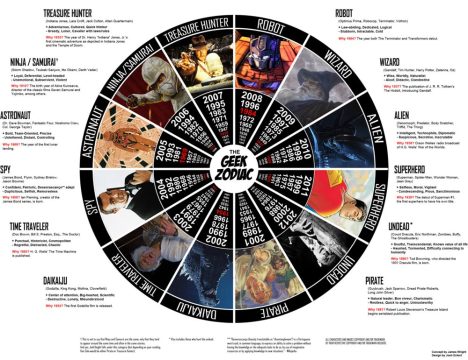
I’m just stealing everything from PZ today. But that’s okay because I’m a wizard and I can do what I want.

I want this in video game form. Now.

What have we had our fellow primates do in video games so far? Throw barrels? Run around on an island so boring that only the most devoted video game fans will understand this reference? Come on. Let’s give them some real fire power.

The only problem is that if we let them snipe, then every asshole is going to grab that weapon and ruin everyone else’s good time.

Thought of the day

It isn’t merely that theists have no evidence for their particular, cultural god(s). It’s that most of them don’t even seem to understand what evidence is.

Things we’ve learned from Republicans

…over the past couple of years:

I just wanted to remind myself why I would never vote for such a moronic party.

Food Revolution

I just watched an episode of Jamie Oliver’s Food Revolution on ABC. It’s basically about this health food chef who goes around to schools in America to try and make a difference in what kids are eating. He started out in Huntington, West Virginia in the first season and apparently made a positive difference there – despite the resistance.

I didn’t see that first season due to my general boycott of shitty network television, but I did catch Oliver in an interview with Jon Stewart recently and I really liked what I saw. Since then I’ve added the show to my DVR recordings and watched the first episode of season 2 just tonight. The editing and format is a little bit all over the place, but the episode had some important information. Of course there were the staggering statistics of what kids eat every day/week/year in sugar/fat/pure feces, but there was also the fact that the L.A. school system will not allow the show to film in a single school. They claim they’re doing well and have nothing to hide, but a 2006 study says otherwise:

To determine the prevalence and identify demographic and socioeconomic correlates of childhood overweight, we assessed height and weight data on 281,630 Los Angeles County, CA, public school students collected during school-based physical fitness testing in 2001. Overweight prevalence was 20.6% overall and varied by race/ethnicity: 25.2% among Latinos, 20.0% among Pacific Islanders, 19.4% among blacks, 17.6% among American Indians, 13.0% among whites, and 11.9% among Asians. By using multilevel analysis, we found that school-level percentage of students enrolled in free or reduced-price meal programs was independently associated with overweight, after controlling for school-level median household income and student-level demographic characteristics.

I suspect there is a combination of stubbornness and special interests involved here. Companies make a lot of money off selling shitty food to kids, so it isn’t going to be easy to fix the epidemic. But it’s all the more distressing when the 2nd largest school district in the nation won’t even bother to acknowledge the problem.

Didn’t we already know this?

A new study says older brains are less nimble than younger brains:

The elderly have a harder time multi-tasking than young adults because older people are far less nimble at switching neurological connections in their brains between activities, according to research released on Monday.

The findings of neuroscientists from the University of California at San Francisco add new insights to a growing body of studies showing that one’s ability to move from one task to another in quick succession becomes more difficult with age.

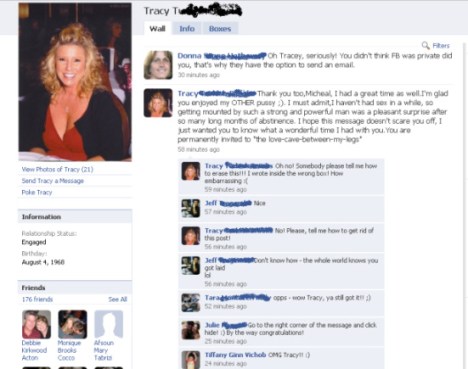
I thought this was already pretty clear. I don’t mean from the stand point of common sense – it is clear from the position, but evidence is important in actually knowing what is true. What I mean is that for the past several years Facebook has been open to everyone. Once the company did away with requiring school email addresses to sign up, the number of technologically inept people skyrocketed, primarily with old people. (As I’ve said before, “old” does not necessarily refer to age here.) It wasn’t too long until it became obvious that quite a few old people were unable to deal with Facebook like adults. From responding to other posts by making wholly new status updates to trying to keep their conversations straight between posts, links, and statuses, anyone who has been paying attention knows that Facebook is not the place for old people.

(Click to enlarge. If old, retrieve your reading glasses.)

Thought of the day

Kids deserve respect.