

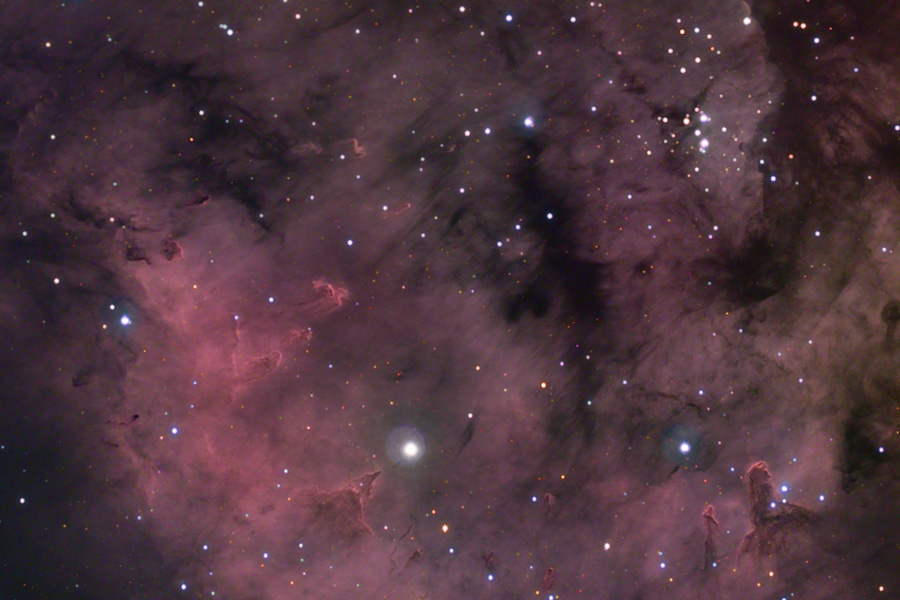
The Star Pillars of Sharpless 171
Filed under: Astronomy/Cosmology/Physics | Tagged: hubble, Hubble fotos, Hubble images, hubble pictures, The Star Pillars of Sharpless 171 | Leave a comment »

 | septrose14 on Reddit layoffs |
 | shelldigger on Thought of the day |
 | The Sauciest Duck on Chauvin and Rittenhouse |
 | Michael on Chauvin and Rittenhouse |
| Stephen Moreton on Chauvin and Rittenhouse | |
 | Mele Kalikimaka | Fo… on Merry Christmas |
| Mele Kalikimaka | Fo… on Mele Kalikimaka |
 | somdeblahiriyahoocoi… on Thought of the day |
| Michael on Wuhan virus and one last… |
| Quick correction | F… on The A-Unicornist, Bernie Bro… |
The Star Pillars of Sharpless 171
Filed under: Astronomy/Cosmology/Physics | Tagged: hubble, Hubble fotos, Hubble images, hubble pictures, The Star Pillars of Sharpless 171 | Leave a comment »
With musical talent like this, I don’t know what he was doing with all that science-y stuff.
Filed under: Astronomy/Cosmology/Physics, Atheism/Humanism, Misc, Science | Tagged: Carl Sagan - 'A Glorious Dawn' ft Stephen Hawking (Cosmos Remixed), melodysheep | Leave a comment »
So it hasn’t escaped my notice that my hit count has been treading absurdly high in the past couple of days. And it equally hasn’t been missed that most of the views are devoted to my Hubble contest post. Well, it turns out I’m a bit late, but the reason is that NASA has released new images since Hubble’s last repair.
“Hubble is back in action. Together, NASA and Hubble are opening new vistas on the universe,” astronomer and frequent Hubble user Heidi Hammel said.
With the obligatory quote out of the way, let’s get to what everyone wants: the photos.
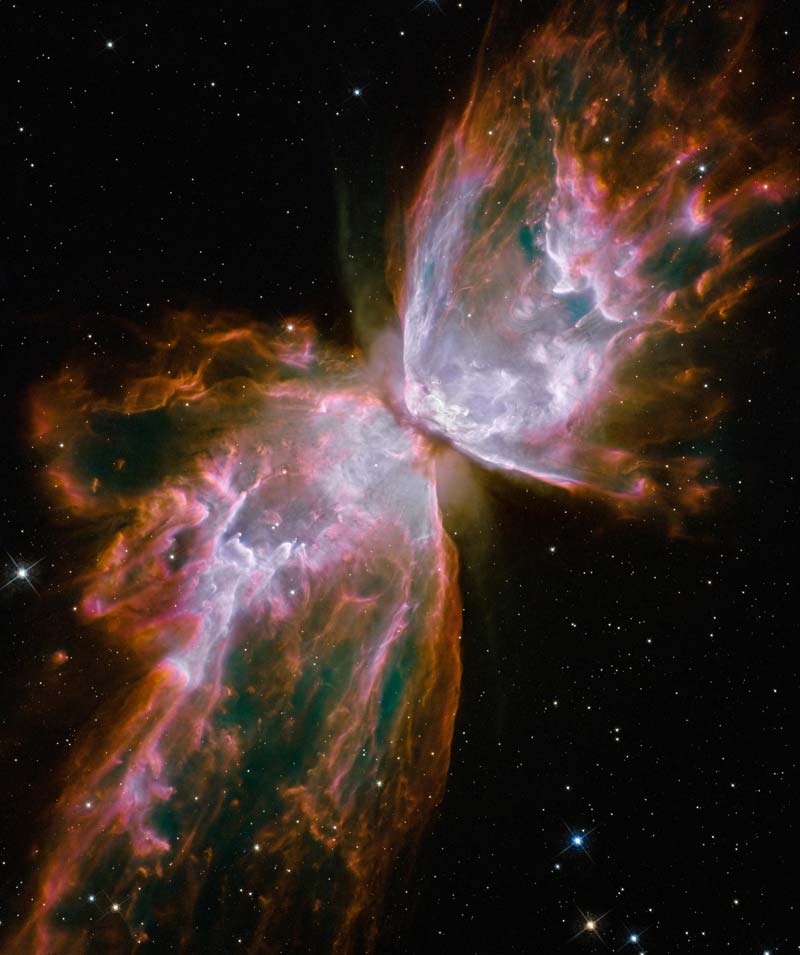
NGC 6302, Butterfly Nebula

Hickson Compact Group 92, Stephan’s Quintet
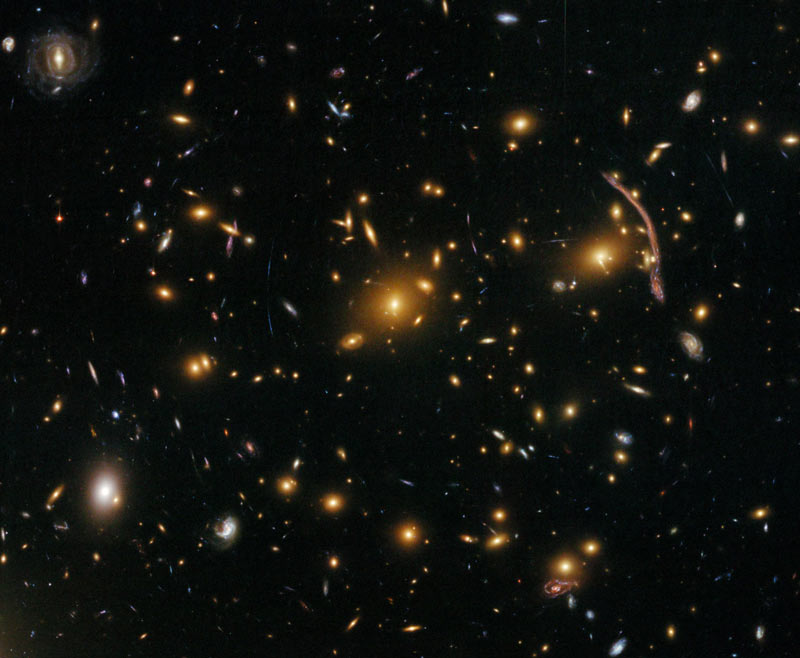
Abell 37

NGC 6217
Filed under: Astronomy/Cosmology/Physics | Tagged: Advanced Camera for Surveys, Butterfly Nebula, Gravitational Lensing, hubble, Hubble fotos, Hubble images, Hubble Space Telescope, NASA, NGC 6302, Spiral galaxy, WFC3, Wide Field Camera 3 | Leave a comment »
Apologies for the lame post title.
I was walking down my semi-rural road this evening and noticed that I could see most of the way down it. The reason was that the moon was lighting my way rather efficiently. Using that as inspiration – and because the beginning of another semester brings a lot of work my way, thus making my posting skimpier – here is an image of a full lunar eclipse from February 20, 2008.

The next eclipse is scheduled for December 21, 2010.
Filed under: Astronomy/Cosmology/Physics | Tagged: December 21, February 20, Lunar Eclipse, NASA | Leave a comment »
Filed under: Astronomy/Cosmology/Physics | Tagged: Billions and Billions, Carl Sagan, Cosmos, Googol, Googolplex | Leave a comment »

Hubble image of a spiral galaxy, M74.
Filed under: Astronomy/Cosmology/Physics | Tagged: hubble, M74, Spiral galaxy | Leave a comment »
Yahoo! has an article from Space.com which talks about a Hubble image of three interacting galaxies known as Arp 194. Upon reading the article, I noticed there was a picture of the winner of the recent Hubble contest. Naturally, I assumed I was reading an article about that galactic trio. But then I realized the name of that image was Arp 274, not the Arp 194 mentioned in the third graf. So what was going on? Well, it’s pretty simple. Yahoo! took the Arp 274 image and placed it – misleadingly – next to the article about Arp 194. No misreading. No misinterpretation. No mistake on my part. Yahoo! just decided to put up an incorrect picture. Next they’ll talk about the president and put up an image of Jefferson.
Anyway, here’s the image that was being discussed.

Filed under: Astronomy/Cosmology/Physics | Tagged: Arp 194, Arp 274, hubble, Hubble image contest, space.com, Yahoo! | 1 Comment »
Yahoo! has an article from Space.com which talks about a Hubble image of three interacting galaxies known as Arp 194. Upon reading the article, I noticed there was a picture of the winner of the recent Hubble contest. Naturally, I assumed I was reading an article about that galactic trio. But then I realized the name of that image was Arp 274, not the Arp 194 mentioned in the third graf. So what was going on? Well, it’s pretty simple. Yahoo! took the Arp 274 image and placed it – misleadingly – next to the article about Arp 194. No misreading. No misinterpretation. No mistake on my part. Yahoo! just decided to put up an incorrect picture. Next they’ll talk about the president and put up an image of Jefferson.
Anyway, here’s the image that was being discussed.

Filed under: Astronomy/Cosmology/Physics | Tagged: Arp 194, Arp 274, hubble, Hubble image contest, space.com, Yahoo! | 1 Comment »
In the search for Earth-like planets, astronomers zeroed in Tuesday on two places that look awfully familiar to home. One is close to the right size. The other is in the right place.
European researchers said they not only found the smallest exoplanet ever, called Gliese 581 e, but realized that a neighboring planet discovered earlier, Gliese 581 d, was in the prime habitable zone for potential life.
…
While Gliese 581 e is too hot for life “it shows that nature makes such small planets, probably in large numbers,” Marcy commented. “Surely the galaxy contains tens of billions of planets like the small, Earth-mass one announced here.”
I don’t think most people recognize the significance of science like this. Scientists will never find themselves short of planets to observe. Our small, insignificant star has 8 planets around it. Assuming the average star has only 1 planet in its orbit, that’s still trillions of planets. The number is probably less than 1 per star, I’d guess, but who knows? It’s at least certainly unfathomably high. A small fraction per star would still yield a huge number; there are more stars in the Universe than grains of sands on all the beaches of Earth. Not enough people appreciate that fact.
Filed under: Astronomy/Cosmology/Physics | Tagged: European Week of Astronomy and Space Science, Exoplanets, Geoff Marcy, Gliese 581 d, Gliese 581 e, Habitable Zone, Michel Mayor, NASA, Stephane Udry, University of Hertfordshire | 1 Comment »

This is a photo of Pulsar B1509 taken by NASA’s Chandra X-ray observatory. There is a poll which is attached to the article on this image.
What do you think is captured on the recently released NASA photograph?
“A natural stellar formation” is leading because the poll has been crashed by PZ Myers. But even though atheists crashed this poll to give it the correct answer, creationists can’t possible view this as being the hand of their particular sky fairy.
Taken by NASA’s Chandra X-ray observatory from it’s orbiting 360 miles above the Earth, the recently released photo of Pulsar B1509 captures the X-Ray nebula in a state shaped like a human hand. NASA estimates the shape spans 150 light years, but is caused by a dense neutron star that’s just 12 miles in diameter.
Astronomers believe B1509 is roughly 1,700 years old and is located 17,000 light years from Earth.
If this was God’s hand, it’d have to have existed since the beginning of time (in fact, since before the beginning of time – creationists have incredible insights into the pre-Universe). It is only 1,700 years old. As we all know, if this were the hand of the particular cultural god of Christians, it would would need to exist since roughly the beginning of the agricultural revolution – i.e., the beginning of all time.
Also, it has four fingers.
Filed under: Astronomy/Cosmology/Physics | Tagged: Chandra X-ray Observatory, NASA, Pulsar B1509 | Leave a comment »
 For the Sake of Science