Why it’s so easy

The more and more I think about it, the more and more I recognize just how easy it is to understand evolution.

Evolution is the change within populations over time. This change is continuous. Take birds, for instance. They are descended from dinosaurs. Depending on who you ask, you might even hear them referred to as dinosaurs. However, for the sake of argument, let’s draw a line in the sand. Let’s say birds are birds and dinosaurs are dinosaurs. There is no single point to which we can point that says “Ah-ha! This is the generation in which birds originated!” Evolution doesn’t work that way.

Life is gradual in the big picture. The lines are blurry as to where one species begins and where another ends. It is simply a matter of convenience that we are able to make the distinctions we make. Ancient birds weren’t great at flying. Less ancient birds were better. Even less ancient birds were even better. And then, sometimes, extant birds are back to being terrible at flying. It just so happens that we’ll never know what every year of every species was like. If we ever do, we won’t be able to say “Such-and-such is Species X and this other example is Species Y”. We’ll be looking at Species X.1, X.11, X.111, X.112, etc.

To be this all another way, mother birds (or bats or monkeys or humans or bears or prarie dogs) only give birth to daughter birds (or bats or monkeys or…etc). But over time, small changes accumulate. Think of how much you probably resemble your father in some way. Now think of how much you resemble your grandfather. Odds are, you resemble him less than you resemble your father. Go back further and you’ll see more changes. And that’s just on a phenotypic (for purposes here, “physical”) level. Go to a genotypic (genetic) level and there’s no questioning the facts. You are more similar to your close relatives than to your distant ones.

Now we have to extend this concept over time. We have plenty of it. Evolution has been playing out for nearly 4 billion years. Think about that for a moment. You’ll live around 80 years. If you’re lucky, you might hit 100. A tremendously long human lifespan would be another 20 years on top of that. It’s all a blip on the timescale of Life on Earth.

So here’s what you should be thinking. Every generation is similar to the previous generation. It doesn’t matter what species we want to specify. It’s always true. But the further back we go, the fewer similarities we see. But importantly, we still see similarities.

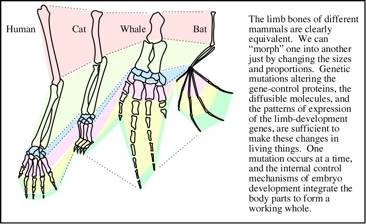
Take the bones in the wing of a bat. They are easily matched with the bones in the hand of a human or the paw of a cat. They are the same bones but shaped vastly differently. It isn’t simply a huge (convenient) coincidence that this is so. Bats share a common ancestor with other mammals. This common ancestor, being that it is found deeply in time, would hold notable similarities with all extant mammals, but it obviously wouldn’t visually match with every single organism (or even a majority).

But the visual match isn’t all with which we need to concern ourselves. That common ancestor wouldn’t be able to breed with anything alive today. The changes have been far, far too considerable since its time.

I’m breaking stride for a moment because I want to note something. The changes which occur over time in a species are what cause it to be considered a new species. In other words, when two populations cease to be able to breed and produce fertile offspring, we have a two separate species (which one we want to call the “new” one is somewhat subjective, but usually it’s the one least resembling the common ancestor). As I said, there is no single point where speciation happens, but imagine for a moment approximately the time where two populations cease to be able to breed. It won’t be one defined generation where it occurs, but there will be some generation somewhere where some members of a population cannot successfully produce fertile offspring with members of another population.

On the face of it, this sounds like I’m contradicting what I’ve been saying all along about not being able to pinpoint one generation. I’m not.

Remember I talked about the lines being blurry. While some members of one population probably won’t be able to breed with some members of another population, that won’t be true for all members of both groups. Much breeding will still be possible. With time, those possibilities dwindle. Eventually, the line begins to come into focus. That is how evolution works: It’s gradual.

So again, the more and more I contemplate evolution, the more and more it makes so much sense. Of course, the evidence is crystal clear and I don’t need this contemplation to confirm the theory. However, it is through this focus that I’m forced to wonder why we had to wait until Charles Darwin and Alfred Wallace to really recognize how new species come into existence. The truth is that changes occur in populations over vast expanses of time. Then most of the world’s populations either continue to evolve or, more likely, go extinct. In hindsight, we observe definitive periods of stasis, almost leading one to believe in static, unchanging species. Almost.

Forelimb morphology

Charles Darwin and the Tree of Life

I recently watched a BBC America special by David Attenborough titled Charles Darwin and the Tree of Life. It was excellent. I’m familiar with Attenborough. Any fan of science probably is. However, I’ve had limited exposure to the man. He isn’t as popular in America as he is across the Pond as far as I can tell. At the very least, he isn’t promoted much on most of the science shows and networks I watch. I’ve been missing out. He has a passion about him that is as strong as the passion that was within Carl Sagan. I was especially struck by an absolutely beautiful segment in the show which broadly walked through the history of life. The video description says it will make one feel insignificant. It should. At the same time, though, it shows a grandness in Life, and that’s something of which we are all apart.

The purpose of purpose

The stupidity, it doesn't stop

This is currently on Conservapedia’s front page:

The killer at the U.S. Holocaust Memorial Museum, James von Brunn, was a white supremacist and also an evolutionary racist. James von Brunn wrote that “Only the strong survive. Cross breeding whites with species on the evolutionary scale diminishes the white gene-pool while increasing the number of physiologically, psychologically, and behaviorally deprived mongrels.” The evolutionist Charles Darwin was also an evolutionary racist. The shooter, James von Brunn, also appears to have had close ties to neo-Nazis and his ex-wife said his anti-semitism and racist hate “ate him alive like a cancer”. Adolf Hitler was also a rabid evolutionary racist.

Aside from reading like a child wrote it, this is just the same old creationist appeal to emotion. These people have no evidence to back up their horribly stupid views, so they resort to dumb things like this; evolution means racism!!! It’s therefore wrong!!1!!

But here’s the kicker. Even if one were to ignore the glaring logical fallacy in the wee little minds of Conservapedians, the argument still fails. Being wrong is also a major no-no when making any argument.

James von Brunn’s beliefs are not based upon any real understanding of evolution or genetics. If they were, then he’d know that two white people can be more genetically diverse between each other than a white person and a black person. In other words, race doesn’t have any biological grounding. So if Conservapedians actually think it is a valid tactic to judge the merits of scientific evidence based upon inconveniences that it may give, then the real argument here is that evolution informs us that racism has no good basis and is therefore stupid.

von Brunn’s idea of evolution is very close to the creationist idea of the theory. Neither one is anywhere near correct. They both use their particular versions of this revolutionary concept to suit themselves. von Brunn thought there was a significant genetic basis for races. Creationists think evolution actually says that. The only difference between these abuses is scale. von Brunn is one guy with wrong ideas and the crazy to back them up. Creationists are a huge group of poorly educated, unfortunately ignorant individuals* who harm the progress of science by rejecting the most fundamental concept to an entire field.

The Conservapedia piece mentions that Charles Darwin was an “evolutionary racist”. This is more conservative screaming and kicking. Reasonable people keep pointing out just why they are wrong, but the conservatives just switch to more convinced language. That’ll do it.

Darwin held many of the racist beliefs of his day, but he didn’t need evolution to get him there. His science stands firm, regardless of what he may have believed. But for what it’s worth, he was ahead of his time with his race views. He also was a big abolitionist.

As for Hitler, he suffered from the issues as von Brunn. In addition, however, the man may have just been abusing any old idea for his purposes. He invoked all sorts of beliefs, including the words of Jesus, to rally support for his plans, actions, and goals. This says nothing of whether or not he was right.

*Ignorance is no crime. We’re all guilty of it. Fortunately, there are remedies.

The stupidity, it doesn’t stop

This is currently on Conservapedia’s front page:

The killer at the U.S. Holocaust Memorial Museum, James von Brunn, was a white supremacist and also an evolutionary racist. James von Brunn wrote that “Only the strong survive. Cross breeding whites with species on the evolutionary scale diminishes the white gene-pool while increasing the number of physiologically, psychologically, and behaviorally deprived mongrels.” The evolutionist Charles Darwin was also an evolutionary racist. The shooter, James von Brunn, also appears to have had close ties to neo-Nazis and his ex-wife said his anti-semitism and racist hate “ate him alive like a cancer”. Adolf Hitler was also a rabid evolutionary racist.

Aside from reading like a child wrote it, this is just the same old creationist appeal to emotion. These people have no evidence to back up their horribly stupid views, so they resort to dumb things like this; evolution means racism!!! It’s therefore wrong!!1!!

But here’s the kicker. Even if one were to ignore the glaring logical fallacy in the wee little minds of Conservapedians, the argument still fails. Being wrong is also a major no-no when making any argument.

James von Brunn’s beliefs are not based upon any real understanding of evolution or genetics. If they were, then he’d know that two white people can be more genetically diverse between each other than a white person and a black person. In other words, race doesn’t have any biological grounding. So if Conservapedians actually think it is a valid tactic to judge the merits of scientific evidence based upon inconveniences that it may give, then the real argument here is that evolution informs us that racism has no good basis and is therefore stupid.

von Brunn’s idea of evolution is very close to the creationist idea of the theory. Neither one is anywhere near correct. They both use their particular versions of this revolutionary concept to suit themselves. von Brunn thought there was a significant genetic basis for races. Creationists think evolution actually says that. The only difference between these abuses is scale. von Brunn is one guy with wrong ideas and the crazy to back them up. Creationists are a huge group of poorly educated, unfortunately ignorant individuals* who harm the progress of science by rejecting the most fundamental concept to an entire field.

The Conservapedia piece mentions that Charles Darwin was an “evolutionary racist”. This is more conservative screaming and kicking. Reasonable people keep pointing out just why they are wrong, but the conservatives just switch to more convinced language. That’ll do it.

Darwin held many of the racist beliefs of his day, but he didn’t need evolution to get him there. His science stands firm, regardless of what he may have believed. But for what it’s worth, he was ahead of his time with his race views. He also was a big abolitionist.

As for Hitler, he suffered from the issues as von Brunn. In addition, however, the man may have just been abusing any old idea for his purposes. He invoked all sorts of beliefs, including the words of Jesus, to rally support for his plans, actions, and goals. This says nothing of whether or not he was right.

*Ignorance is no crime. We’re all guilty of it. Fortunately, there are remedies.

Macro- and microevolution

In a Facebook discussion, one friend described macroevolution as such.

Macroevolution is microevolution given enough time.

In response from a creationist friend (yes, I maintain them), he got this.

HA.

Here is a fuller explanation of the terms from yours truly. Enjoy.

[That person’s] explanation is apt. First, it addresses the terms to the extent that they probably deserve. No scientist uses them in any meaningful way, except when addressing the invalid issues of creationists. And that’s the truth: the terms are largely of creationist origin. They arose as a means to appear more reasonable to the public. Similarly, there is a strategy going around creationist organizations known as “strengths and weaknesses”. It seeks to make creationists seem more reasonable. In truth, we’re just seeing an extension of normal creationist coyness from the organized among the crowd (i.e., the Discovery Institute & friends).

But insofar as the terms mean anything, one is just a description of the other on another scale. Here’s why.

Evolution is a continuous process. At no single point in history can anyone point and say, yes, here is where species X began. Natural selection works gradually and cumulatively. It is simply a matter of convenience that we can separate species. All their ancestors are gone to say otherwise. In other words, a mother dinosaur only gives birth to daughter dinosaurs. But gradually, those dinosaurs change into something slightly different. Over wide expanses of time, those slight changes add up to big changes. This should be a hugely simple concept. Feathers, webbed feet, webbed arms, lighter frames. This all eventually add up to the evolution of birds. (Some scientists consider birds modern day dinosaurs, a somewhat trivial issue.) But at no point did a dinosaur lay an egg which hatched into an eagle. It took a huge number of small changes to lead that bird. That is what microevolution does over thousands and millions of years to produce macroevolutionary changes which can only be identified in hindsight, eons later.

Only in the light of evolution 3

Once again I am following a chapter in Jerry Coyne’s Why Evolution is True.

There is a pattern within Life that can be seen on oceanic islands. Species which are present are often endemic – only found in that one location. The species common to continents, on the other hand, are often not present on these islands.

In 1703, Alexander Selkrik was part of a plundering group that sailed to the Juan Fernandez archipelago, a few hundred miles off the coast of Chile (pretentiously pronounced “chill-a” by people not from Chile who like to pretend they’re so full of culture). He was voluntarily marooned on one of the islands (Mas a Tierra). He remained there for over four years. He hunted goats and utilized other species introduced by earlier sailors. Little did Selkrik know, his island (now named Alejandro Selkrik Island) was full of these foreign species.

On the island are five species of birds, 126 species of plants, a fur seal, and various insects which are entirely unique to the location. Equally notably, there’s a lot missing from the island. There are no native amphibians, reptiles, or mammals. Islands throughout the world show this same pattern.

Creationism wholly fails to explain the distribution of species – biogeography. It is only in the light of evolution that any logically tenable solution is found. Species are spread across the globe in patterns which follow the movements of the continents. For instance, plants which have a clear common ancestor are explained by the fact that Earth once was composed of a supercontinent known as Gondwana. It split into several sections. This divided species which had already split from one another, causing more adaptation (or extinction). One must believe in tremendous coincidences to just wave this away. That is, the evidence (the biggest foe of the creationist) says plate tectonics caused the movement of the continents which corresponds perfectly to the distribution of species. There is no other plausible explanation.

When observing the world’s biogeography, it is obvious that Australia needs some explanation. Why is it dominated by marsupial mammals while lacking so much in placenta mammals? Better yet, why is the rest of the world lacking in marsupial animals (except for the Virginia opossum)? The answer is in evolution. The animals on Australia show their common ancestry with animals elsewhere by their Class: they are mammals, just as tamarins are mammals. However, they show their divergence and evolution with key differences. Notably, the birthing process and raising of young differs drastically.

Now here’s a prediction that all this makes. Marsupials are found as early as 80 million years ago. Interestingly, they are not found at this time in Australia, but instead North America. With their evolution, they spread to South America about 40 million years ago. About 10 million years later, they’re in Australia. This means there was a connection of land from South America to Australia. The evidence bears this out. Geologists know South America was connected to Antarctica. That in turn was connected to Australia – actually, it was more like a cobble of connection; these continents were all part of Gondwana, deep in the Southern Hemisphere. So, to get from South America to Australia, marsupials must have passed over what is now Antarctica. Prediction: There should be fossils dating between 30 and 40 million years in Antarctica.

It shouldn’t surprise you to learn that, yes, there are marsupial fossils in Antarctica. And yes, they date from 35 to 40 million years in age. Again, a person has to believe in tremendous coincidence to reject this evidence. Geologists independently concluded that Gondwana existed and how it separated, and at roughly what times this all happened. Biologists then concluded that, if evolution is true, marsupial fossils must be presented in a particular location. They were right. Only in the light of evolution does this make sense.

Coyne goes on to explain islands, which I may address in the future. For now, I will leave the evidence at this point. The tremendously short attention span of people – creationists and rationalists alike – forces my hand.

More interesting fossils than Ida

Ida is a new fossil discovery that has been horribly over-hyped. It is being called “the missing link”. Following sentences usually mention humans. In other words, some articles are crafty and don’t directly say this fossil is important to Homo sapiens. Others are less crafty. All of this non-sense plays right into the hands of the lying creationists (sorry to be redundant).

Darwinius masillae, otherwise known as Ida, is a tremendously well-preserved fossil that is a primate ancestor. As with most fossils, it was probably a relatively close cousin of one of our direct ancestors. (Note, “relatively close”. Of course, all fossils we find are eventually cousins of our ancestors, if they aren’t directly our ancestors.) How close is difficult to tell – forget saying it’s a direct ancestor. It is a member of the same suborder as humans (and apes and monkeys), haplorhine, but that doesn’t mean Ida wasn’t the last member of her particular population. It can tell us some interesting things, but it in no way independently confirms evolution. Science doesn’t work that way; theories are supported by a wide body of evidence. A single find can add a little weight to a theory, but doesn’t usually completely make a theory. (Notable, if this were found in the, say, Jurassic period, it would have been a find that actually spun evolution on its head – find me a part of creationism [or its coy, dishonest, lying cousin intelligent design] that can be falsified.)

So while interesting and not simply trivial, there are more important fossils out there than Ida. What’s more, there are more interesting fossils. (Guess which claim is the author’s opinion.) Here are some.

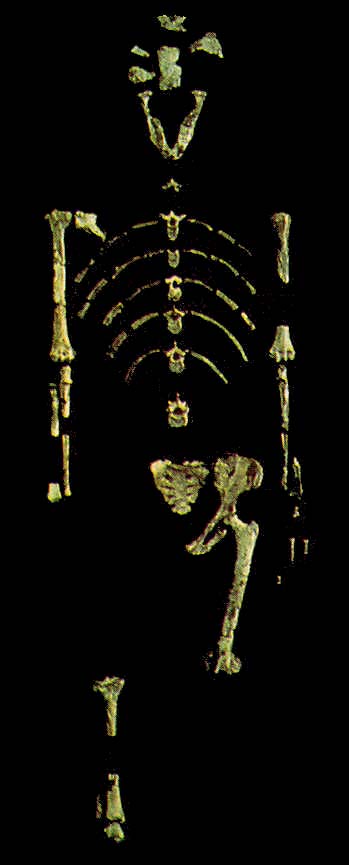
Lucy

Lucy

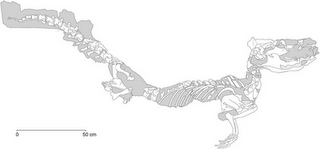
Maiacetus inuus

Maiacetus inuus

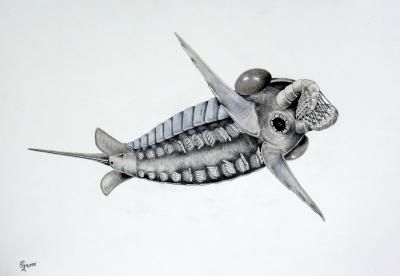
Schinderhannes bartelsi

Schinderhannes bartelsi

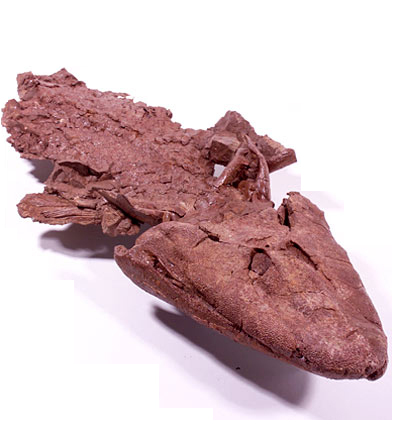
Tiktaalik

Tiktaalik

Only in the light of evolution 2

I am again following a specific chapter in Jerry Coyne’s Why Evolution is True.

Natural selection molds what it is given. It does not create new features (mutations, however, can create new traits, which can then be molds, ignored, or actively destroyed by natural selection). If this claim is true, then we should expect to see remnants. Natural selection is not a magic wand. It will not cleanly dispose of its waste every time, or even most of the time. This is why we have vestiges.

A vestigial trait is a feature of a species which no longer performs the function for which it evolved. The first one of which everyone thinks for humans is the appendix. It is probably useless. Some arguments have been mounted which say that it may contain bacteria that is useful for the immune system, but I generally find the argument weak. But even if it is true, the appendix is still vestigial because it did not evolve for the purpose of assisting in infection-fighting.

In some of our cousins, near and far, the appendix is much larger than ours. In these instances, the animals are always plant-eaters like rabbits or kangaroos. In our closer cousins like the lemur, they also have a larger appendix, and of course they are mostly plant-eaters. However, when we move to other primates like oranguatans, the appendix becomes smaller. This is because they have less leafy diets. The appendix for these animals serves its original function: it breaks down cellulose into usable sugars with the bacter it contains. (This is why I find the bacteria-for-the-immune-system argument to be weak – appendix bacteria serves a different function in our cousins.)

It should now be clear that the appendix is a vestigial organ in humans. It no longer serves its original purpose, but most of us maintain it. One good reason may be related to appendicitis. This is when the appendix is too narrow and becomes clogged. Back in the day, 20% of people who got this died (and 1 out of every 15 people got it – that’s 1 out of every 100 people dying of this; that’s some very strong natural selection, indeed). Now, we have surgery to fix this, so of the 1 out of 15 who get this condition, only 1% will die. That’s a good reason why it’s being maintained now, but for millions of years, humanity had no surgeons. That left a small, narrow organ ready to kill a large swath of people. It may have been maintained because when it become too small, it caused death too easily. All those people already dying from this didn’t need more people to join them. The risk of death from its evolutionary eradication may have been too much. People with an extra small appendix contributed less to the gene pool than those with slightly larger appendixes.

Again, it is important to remember that vestigial does not mean functionless. It refers to a trait which is still present in a species but does not serve its original function. Whales still carry with them vestigial pelvises and leg bones. These vestiges serve some purpose: they help to anchor some muscles. This only makes sense in the light of evolution. An instance of special creation holds no water because bones specifically made in the shape of pelvis and leg bones aren’t necessary. They’re inefficient. Within the light of evolution, however, this all fits together. Whales are descended from terrestrial animals (the indonyus I mentioned in my last post). When they took to water more and more over millions of years, they gradually lost their need for these bones. They were co-opted as muscle anchors in some instances, but they are not all absolutely necessary to the well-being of a whale. So while this vestigial feature has some use, it is still vestigial because whales are not using it to walk around anymore.

I have emphasized species a couple times in this post. This is because I want to make clear the difference between an atavism and a vestigial trait. A vestigial trait, as we have seen, is something which is the norm for all the members of a species. An atavism, however, is not. It shows up in individuals and is an anomaly.

It is important to note that atavisms are not just random mutations, simple monstrosities. They are the appearance of ancestral traits, reawakened in an extant individual. A person born with six toes is not an example of an atavism because none of our ancestors had six toes. A whale, however, born with a leg is an example. While its pelvic bone is an old trait common among all members of the species, a leg is an anomaly.

The best explanation for atavisms is that they are the re-expression of old genes. They are not perfect expressions because the genes have deteriorated or accumulated mutations while remaining unused in the genome They are crude reenactments of ancestral species long extinct.

In 1980, E.J. Kollar and C. Fisher of UConn produced an atavism in the laboratory. They combined tissue from the lining of the mouth of a chicken embryo on top of tissue from the jaw of a developing mouse. The underlying mouse tissue could not produce teeth on its own, but with the chicken tissue, it did. Of course, chicken do not have teeth. Kollar and Fisher inferred that molecules from the mouse tissue reawakened something in the chicken tissue. In other words, chickens had the genes for making teeth, but didn’t quite have everything needed. Many years later, scientists showed that birds do indeed have a genetic pathway for producing teeth. They are just missing one protein. That protein, unsurprisingly, is present in mice.

This shouldn’t be a new paragraph, but I don’t want anyone to skim over or miss the big point. An animal cannot just have a genetic pathway for producing teeth by chance. It is far, far too complicated. We aren’t talking about a couple amino acids in the correct sequence: this is about groups of genes interacting in specific ways to produce a specific feature. Birds have this pathway, sans one protein. This is because they evolved from toothed reptiles. These reptiles, what with those teeth and all, had a genetic pathway to producing teeth. Over time, birds had no need for teeth, but still had the remnants of their reptilian ancestry. This makes no sense in the framework of instant creation. There exists this complicated pathway that could not exist simply by chance. Yet there it is. The pathway itself is vestigial (present in all members of the species), but its activation is an atavism (occurs in anomalous individuals). Only in the light of evolution is any of this explained.

In some of our cousins, near and far, the appendix is much larger than ours. In these instances, the animals are always plant-eaters like rabbits or kangaroos. In our closer cousins like the lemur, they also have a larger appendix, and of course they are mostly plant-eaters. However, when we move to other primates like oranguatans, the appendix becomes smaller. This is because they have less leafy diets. The appendix for these animals serves its original function: it breaks down cellulose into usable sugars with the bacter it contains. (This is why I find the bacteria-for-the-immune-system argument to be weak – appendix bacteria serves a different function in our cousins.)

It should now be clear that the appendix is a vestigial organ in humans. It no longer serves its original purpose, but most of us maintain it. One good reason may be related to appendicitis. This is when the appendix is too narrow and becomes clogged. Back in the day, 20% of people who got this died (and 1 out of every 15 people got it – that’s 1 out of every 100 people dying of this; that’s some very strong natural selection, indeed). Now, we have surgery to fix this, so of the 1 out of 15 who get this condition, only 1% will die. That’s a good reason why it’s being maintained now, but for millions of years, humanity had no surgeons. That left a small, narrow organ ready to kill a large swath of people. It may have been maintained because when it become too small, it caused death too easily. All those people already dying from this didn’t need more people to join them. The risk of death from its evolutionary eradication may have been too much. People with an extra small appendix contributed less to the gene pool than those with slightly larger appendixes.

Again, it is important to remember that vestigial does not mean functionless. It refers to a trait which is still present in a species but does not serve its original function. Whales still carry with them vestigial pelvises and leg bones. These vestiges serve some purpose: they help to anchor some muscles. This only makes sense in the light of evolution. An instance of special creation holds no water because bones specifically made in the shape of pelvis and leg bones aren’t necessary. They’re inefficient. Within the light of evolution, however, this all fits together. Whales are descended from terrestrial animals (the indonyus I mentioned in my last post). When they took to water more and more over millions of years, they gradually lost their need for these bones. They were co-opted as muscle anchors in some instances, but they are not all absolutely necessary to the well-being of a whale. So while this vestigial feature has some use, it is still vestigial because whales are not using it to walk around anymore.

I have emphasized species a couple times in this post. This is because I want to make clear the difference between an atavism and a vestigial trait. A vestigial trait, as we have seen, is something which is the norm for all the members of a species. An atavism, however, is not. It shows up in individuals and is an anomaly.

It is important to note that atavisms are not just random mutations, simple monstrosities. They are the appearance of ancestral traits, reawakened in an extant individual. A person born with six toes is not an example of an atavism because none of our ancestors had six toes. A whale, however, born with a leg is an example. While its pelvic bone is an old trait common among all members of the species, a leg is an anomaly.

The best explanation for atavisms is that they are the reexpression of old genes. They are not perfect expressions because the genes have deteriorated or accumulated mutations while remaining unused in the genome They are crude reenactments of ancestral species long extinct.

In 1980, E.J. Kollar and C. Fisher of UConn produced an atavism in the laboratory. They combined tissue from the lining of the mouth of a chicken embryo on top of tissue from the jaw of a developing mouse. The underlying mouse tissue could not produce teeth on its own, but with the chicken tissue, it did. Of course, chicken do not have teeth. Kollar and Fisher inferred that molecules from the mouse tissue reawakened something in the chicken tissue. In other words, chickens had the genes for making teeth, but didn’t quite have everything needed. Many years later, scientists showed that birds do indeed have a genetic pathway for producing teeth. They are just missing one protein. That protein, unsurprisingly, is present in mice.

This shouldn’t be a new paragraph, but I don’t want anyone to skim over or miss the big point. An animal cannot just have a genetic pathway for producing teeth by chance. It is far, far too complicated. We aren’t talking about a couple amino acids in the correct sequence: this is about groups of genes interacting in specific ways to produce a specific feature. Birds have this pathway, sans one protein. This is because they evolved from toothed reptiles. These reptiles, what with those teeth and all, had a genetic pathway to producing teeth. Over time, birds had no need for teeth, but still had the remnants of their reptilian ancestry. This makes no sense in the framework of instant creation. There exists this complicated pathway that could not exist simply be chance. Yet there it is. It serves for function. The pathway itself is vestigial (present in all members of the species), but its activation is an atavism (occurs in anomalous individuals). Only in the light of evolution is any of this explained.

Finally, this brings us to dead genes: more accurately, pseudogenes. These are genes which are merely remnants – genes which serve no function because they are no longer intact or expressed properly (as proteins). If evolution is true, then it predicts that many species should have these dead genes, and other species should also have some these genes, but in normal form. An act of special creation makes the opposite prediction – (well, sort of a prediction) – no dead genes should exist because no species have any evolutionary histories.

As it turns out, there are plenty of pseudogenes. All species carry them, but humans specifically carry about 2,000 (we have 25,000 – 30,000 total genes). One such gene is GLO. It produces an enzyme used to make Vitamin C from simple sugar glucose. As evolution predicts, other species have this gene, but it is not in primates (among a few others). Primates have a pseudogene of GLO. They maintain the genetic pathway needed to get to the point where the GLO gene should be activated, but it never follows through. That is, there are four steps in making Vitamin C. GLO is the fourth step. Primates have the first three, but not GLO. This is because the gene has a single nucleotide missing. It is the very same nucleotide which is missing in other primates. As I’ve discussed in the past, shared errors are very good evidence for common descent.

Only in the light of evolution does GLO make sense. All mammals inherited this gene at one point about 40 million years ago. As time passed, the gene was maintained for most mammals. This is because most mammals do not have Vitamin C in their diets. Primates, guinea pigs, and fruit bats get plenty of the stuff. They don’t need to make the protein, so they do not; it saves them in energy needed for its production. What’s interesting here is that as one looks at the sequence between different primates, it becomes more and more unrelated as one travels down the cousin road. The one nucleotide mutation is present in all primates, so it was inherited some time long, long ago. But other parts of the sequence differ in other ways. Human and chimp versions of GLO are more similar than human and orangutan versions because the former split more recently than the latter. Evolution is absolutely necessary if one wants to reason through any of this.

Linky

I have yet to read this article, but it looks interesting. I figured I’d offer something up until I can get to it, what with my lack of posting recently.