


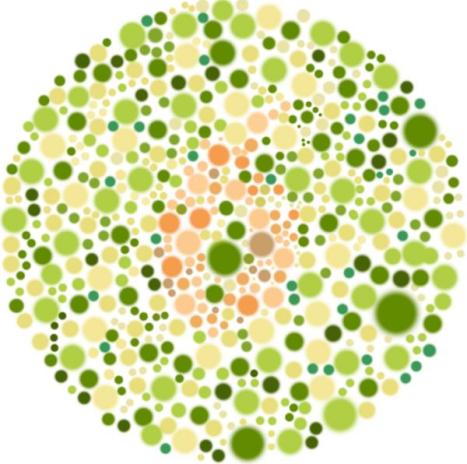
Gene therapy is generally a good thing. Just last year it was used to cure color blindness in spider monkeys. In that instance, an adeno-virus was used to deliver the correct gene into the primates; that’s often how it is done. However, there are drawbacks to this. For instance, insertional mutagenesis may occur. This is where an inserted sequence causes a change in the expression of a nearby gene. In many cases, this will cause cancer. It doesn’t always happen and not all viruses will be the right kind to integrate themselves into the host’s genome, but the possibility is a very real one. Fortunately for the spider monkeys, no side effects have been noted.
Another way to go about fixing faulty genes is to do what Cai et al. did and deliver the correct DNA via nanoparticles. They injected mice which had retinitis pigmentosa, a disease of the eye, with saline, naked plasmid DNA (i.e., not compacted in a nanoparticle), and with nanoparticle compacted DNA (plus a control group that received nothing). The correct gene, the Rds gene, did nothing when it was given alone (and, of course, the saline did just the same). However, the nanoparticle DNA did prove to have an effect. In fact, not only did it retard further degeneration of vision, but it even caused healing in the form of functional and structural improvements.
There are still safety issues that need to be fleshed out with more research, but this method of correcting faulty genes is both promising and pretty exciting. What’s more, it even has opened the avenue for some good zingers.
“Making the blind see was once called a miracle,” said Gerald Weissmann, M.D., Editor-in-Chief of The FASEB Journal. “As we have expanded our understanding of evolution, genetics, and nanotechnology, chances are that “miraculous” cures will become as commonplace as those claimed by faith-healers past and present.”
1. X. Cai, S. M. Conley, Z. Nash, S. J. Fliesler, M. J. Cooper, M. I. Naash. Gene delivery to mitotic and postmitotic photoreceptors via compacted DNA nanoparticles results in improved phenotype in a mouse model of retinitis pigmentosa. The FASEB Journal, 2009; DOI: 10.1096/fj.09-139147
Filed under: Science | Tagged: Gene delivery to mitotic and postmitotic photoreceptors via compacted DNA nanoparticles results in improved phenotype in a mouse model of retinitis pigmentosa, Gene Therapy, Gerald Weissmann, M. I. Naash, M. J. Cooper, S. J. Fliesler, S. M. Conley, The FASEB Journal, X. Cai, Z. Nash | Leave a comment »
 For the Sake of Science