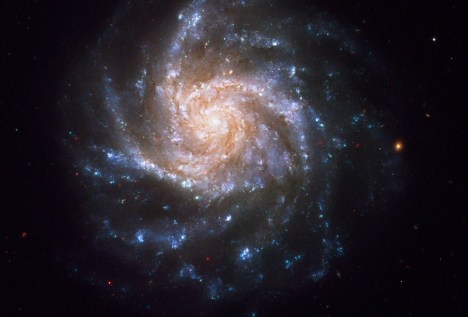
NASA has recently taken an image of a galaxy which is suppose to resemble a snowflake. I guess I can see it, but it’s hard not to just think “Oo, a spiral galaxy” instead.
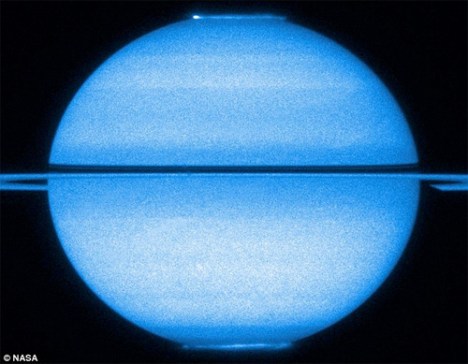
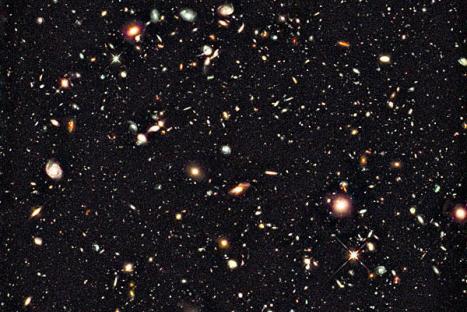
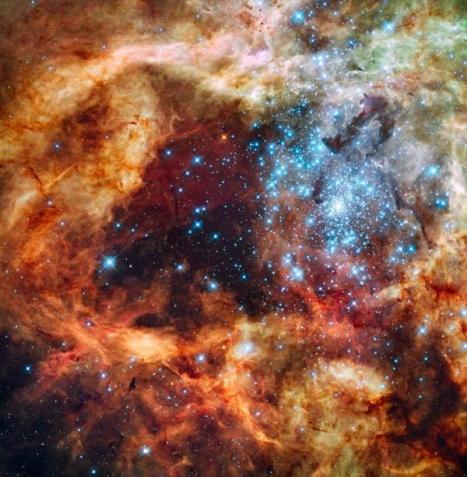
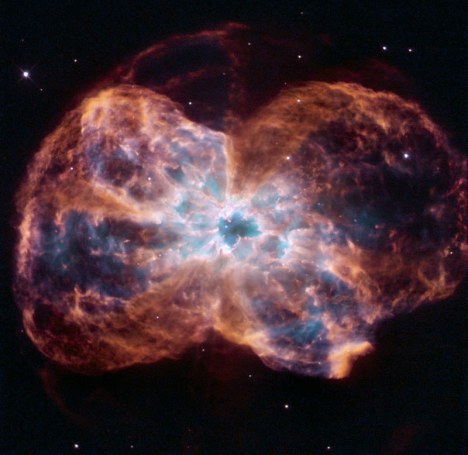
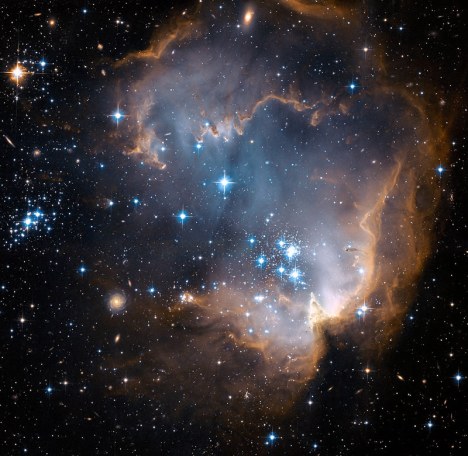
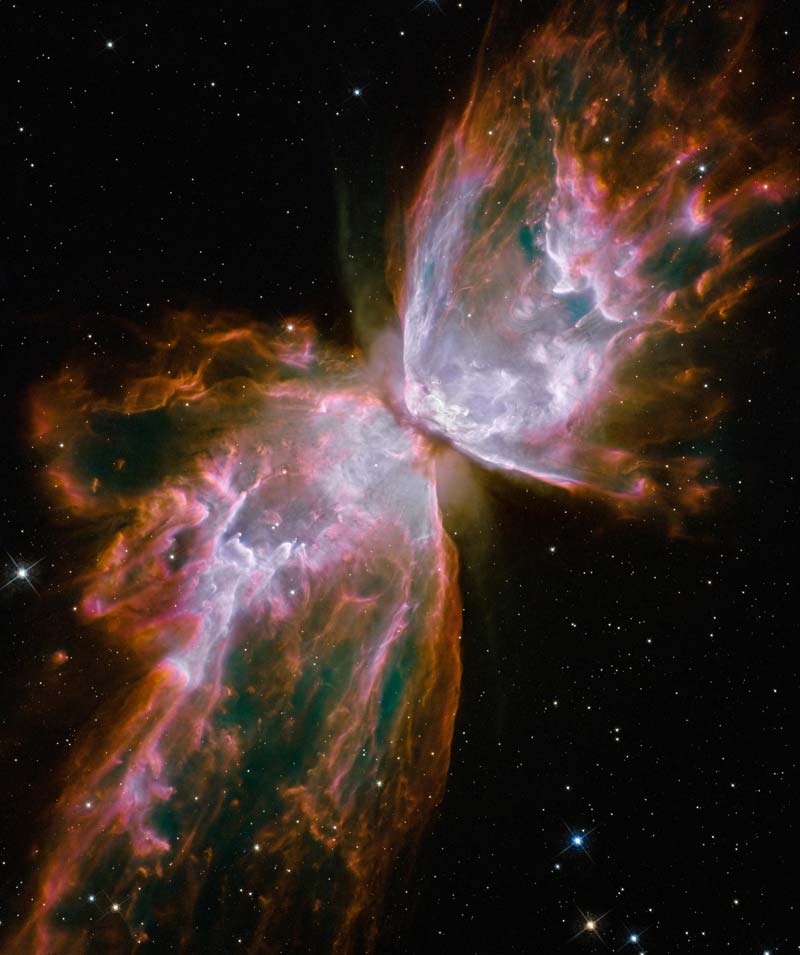
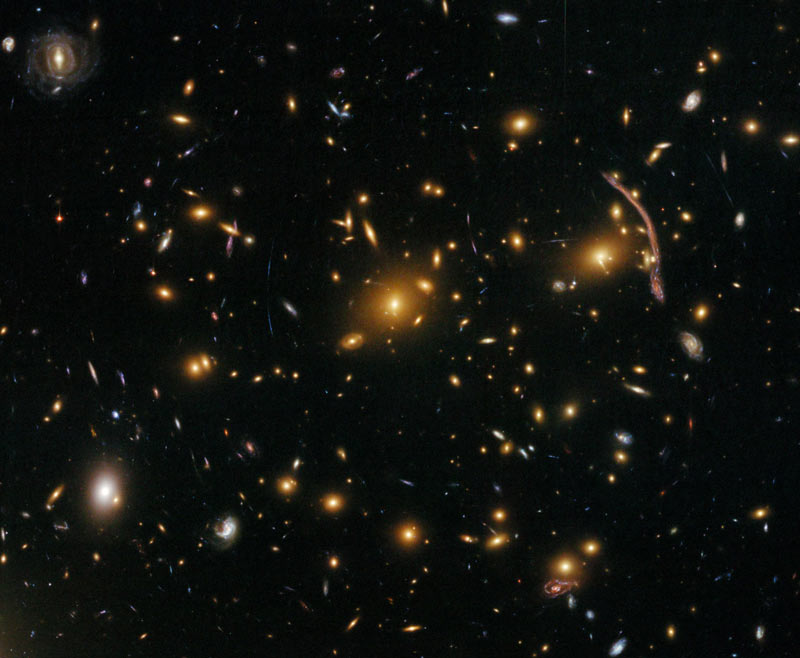
Thanks to a spike in hits today on Hubble posts, I’ve gone and found that NASA released more Hubble images taken since the telescope’s recent upgrade. The first is one of the most recent images (and may as well just be a close-up of a past release). The second is older, but not blurry and generally ugly.
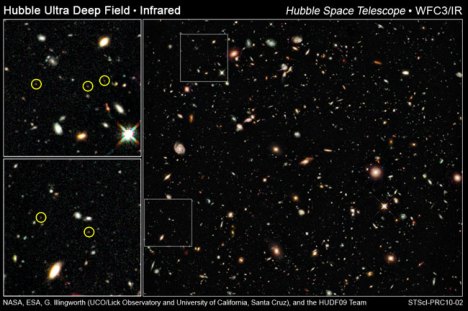
Update: I’m not sure if this one has just been released, but it’s the best I’ve seen so far.
NASA’s Hubble Space Telescope has made the deepest image of the universe ever taken in near-infrared light. The faintest and reddest objects in the image are galaxies that formed 600 million years after the Big Bang. No galaxies have been seen before at such early times. The new deep view also provides insights into how galaxies grew in their formative years early in the universe’s history.
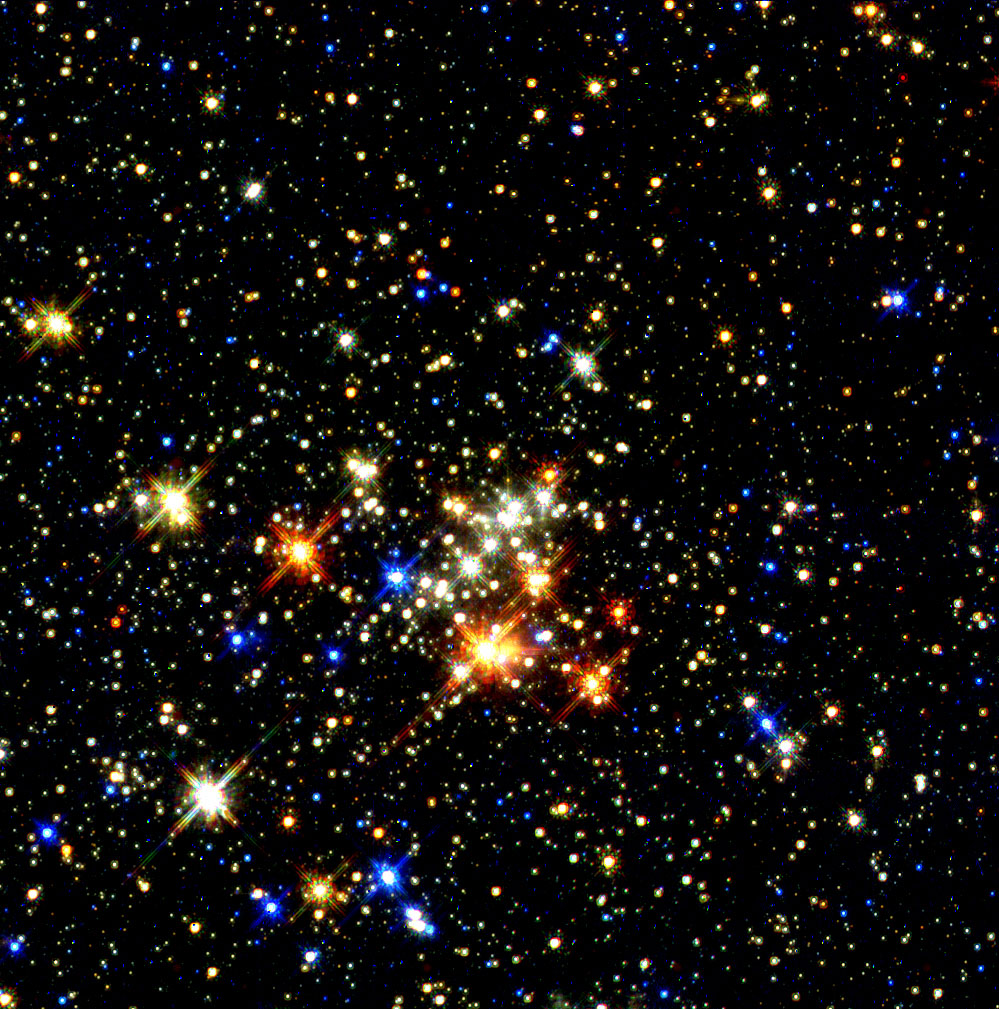
So it hasn’t escaped my notice that my hit count has been treading absurdly high in the past couple of days. And it equally hasn’t been missed that most of the views are devoted to my Hubble contest post. Well, it turns out I’m a bit late, but the reason is that NASA has released new images since Hubble’s last repair.
“Hubble is back in action. Together, NASA and Hubble are opening new vistas on the universe,” astronomer and frequent Hubble user Heidi Hammel said.
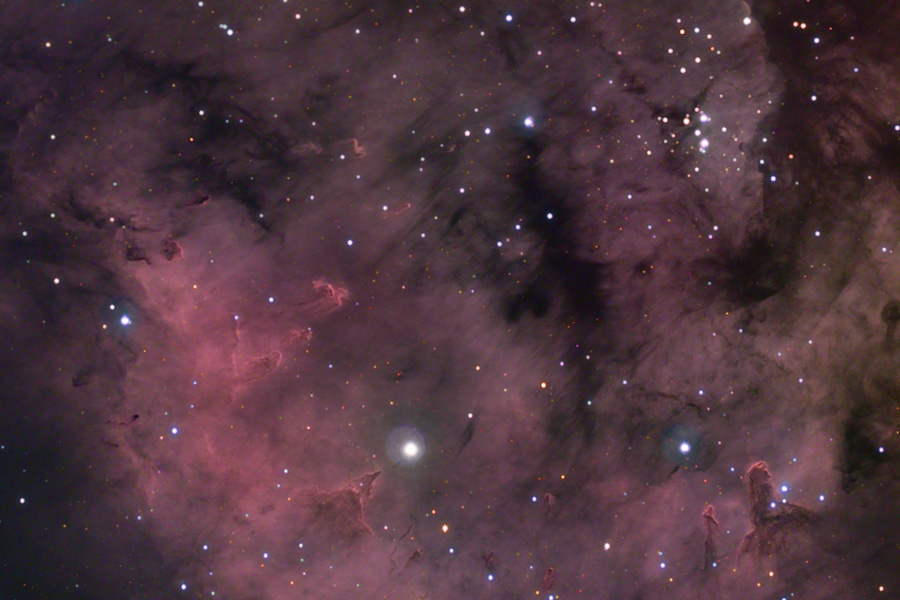
With the obligatory quote out of the way, let’s get to what everyone wants: the photos.
Thanks to the wonder that is LASIK, I can now see very well. I had the surgery done about 18 months ago when I had horrific vision. It brought me to 20/25 vision, which was a decrease from my contacts. Over time, my vision deteriorated a bit, which is normal, especially for someone as young as I am, and it got to 20/40. I decided to have it redone (at a reduced cost) recently. I am now at 20/15 vision. The difference is unbelievable. Everything I see is far more beautiful. The road as I drive is aesthetically pleasing right now. The details of trees are better than ever. Hell, retail stores looks great to me. I hate big box stores. They hate their employees; people are not their concern, just an expense. It’s no wonder so many support Republican causes. But if they’re going to be there, I’d rather be able to see them than not.
But what I’ve missed most of all, lightyears beyond everything else (quite literally), is the night sky. I arrived home last night. No one left the outside light on. The moon was hidden behind Earth’s shadow. I’m not in the middle of a city. The sky was intense. I stared deep into the Milky Way. Just a week ago I shied from doing this because I was so actively disappointed in the blurry edges of the stars. I could hardly identify planets anymore. Everything was dull. Now life feels fundamentally different. It’s been a long time since I’ve been able to capture that deep feeling of physical spirituality. The night sky is where it’s at for me, but it’s been missing for some time now. Science has finally recaptured it for me. It turns out all that namby-bamby empirical evidence actually means something. Who knew.
Looking at the sky last night was stunning. There was pinpoint accuracy in the stars. Everything popped. I cannot wait to go back out.








 For the Sake of Science
