The mountains of Maine

Being that I’m 1) busy and it’s 2) winter, hiking is hard to come by. As such, I’m getting antsy. So here are a few pictures for your (but really my) viewing pleasure.

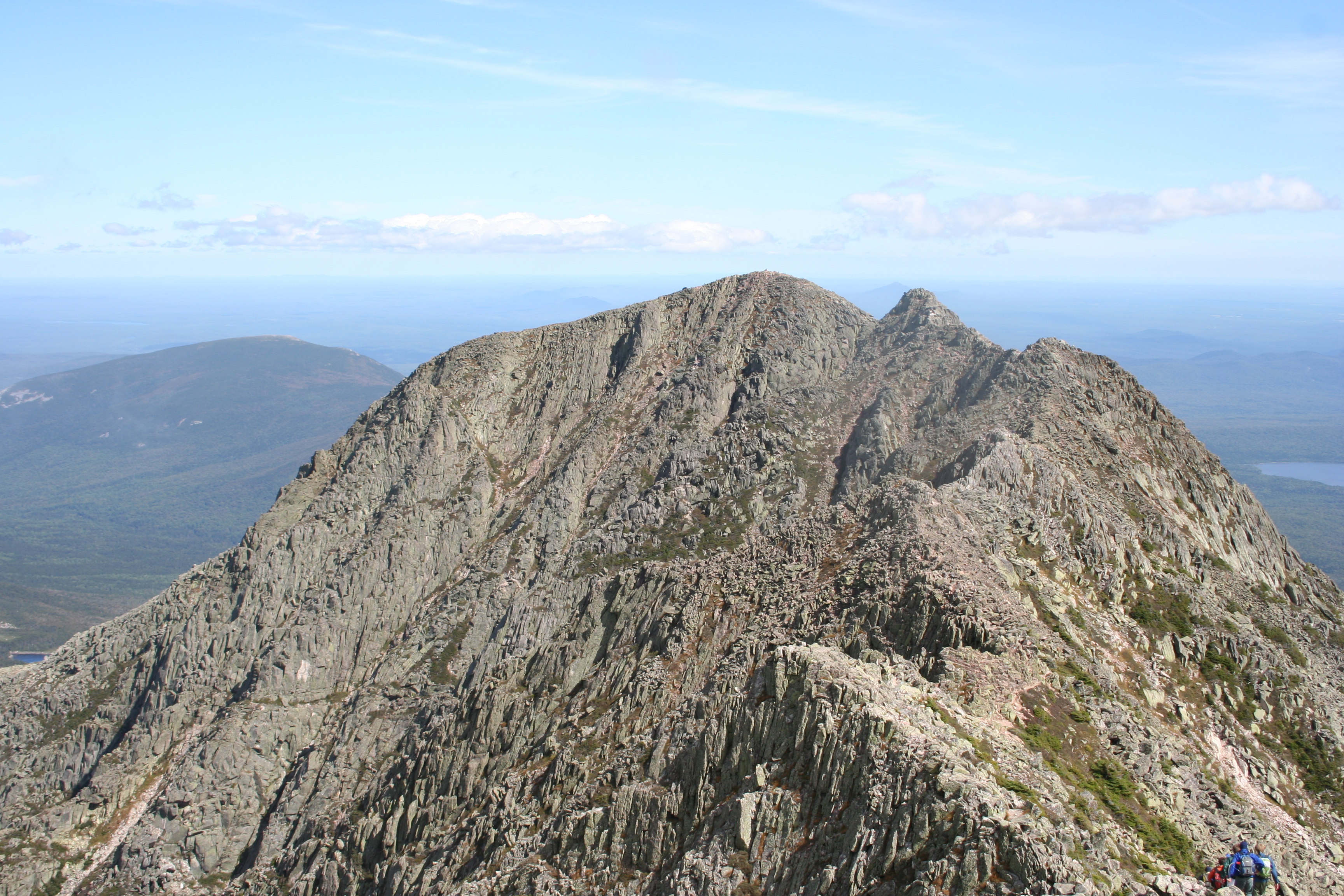
This first one is from the Cathedral Trail heading up Mount Katahdin. That’s looking at The Knife Edge, a relatively narrow 1 mile trail going from the peak (out of view on the right) to Pamola Peak (visible toward the left, just before the thicker cloud cover).

The Knife Edge

This one is on Little Spencer. Katahdin is actually easily visible while summiting here, though I do not believe it is the mountain in the distance. That’s me in this picture (taken by friend Matt Doyon). His brother got nervous when I was that close to the edge (which actually had plenty more rock below, just not visible from this angle), so naturally I had to play it up.
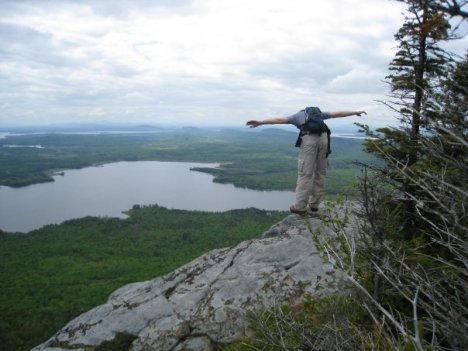
Atop Little Spencer

This next one is from Cadillac Mountain in Acadia National Park. (I’m on the left.) We started around 2:30am to make it up for the sunrise over Bar Harbor, but alas we were thwarted by cloud cover. Going up, however, was fantastic because Bar Harbor is actually the only nearby town really and it isn’t very big (especially in the off-season). That meant low light pollution, giving us fantastic views of a clear night (but not morning) sky with a new moon. Again, photo by Matt.

Cadillac Mountain

This one is from Mount Blue in Mount Blue State Park. Again, Matt took the photo (my camera is just too bulky sometimes). This was my second winter hike (before Cadillac). We pretty much couldn’t have asked for a better day. Fresh, deep snow to make it a challenge, but not obscenely cold (except in the wind of the summit). And perfect sunshine all day.
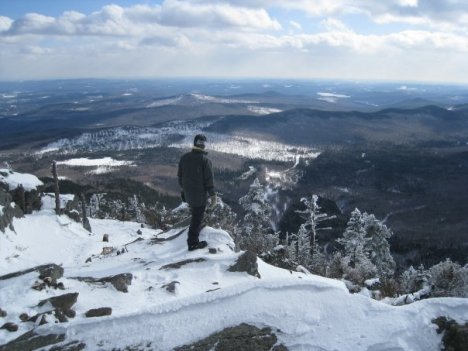
Mount Blue

This final one is from the 100 Mile Wilderness, one of the toughest parts of the Appalachian Trail. I have no idea what mountain I was on nor what mountain I photographed. I do know that I at least have the excuse of trying to photograph an eagle here, hence the crooked horizon. This was taken right after the rainiest, wettest, perhaps most miserable day of my life. It was nothing but glory to have this much sunshine.
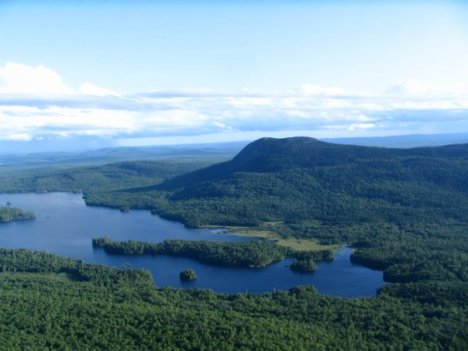
100 Mile Wilderness

Katahdin

Here are some recent photos from a hike up Mount Katahdin, the highest peak in Maine at 5,267 feet. FunFact: It was not formed in the past 6,000 years. It is a cirque, meaning it was formed through a long process at the head of a glacier.

From the summit of Mount Katahdin, looking across The Knife Edge

From the summit of Mount Katahdin, looking across The Knife Edge

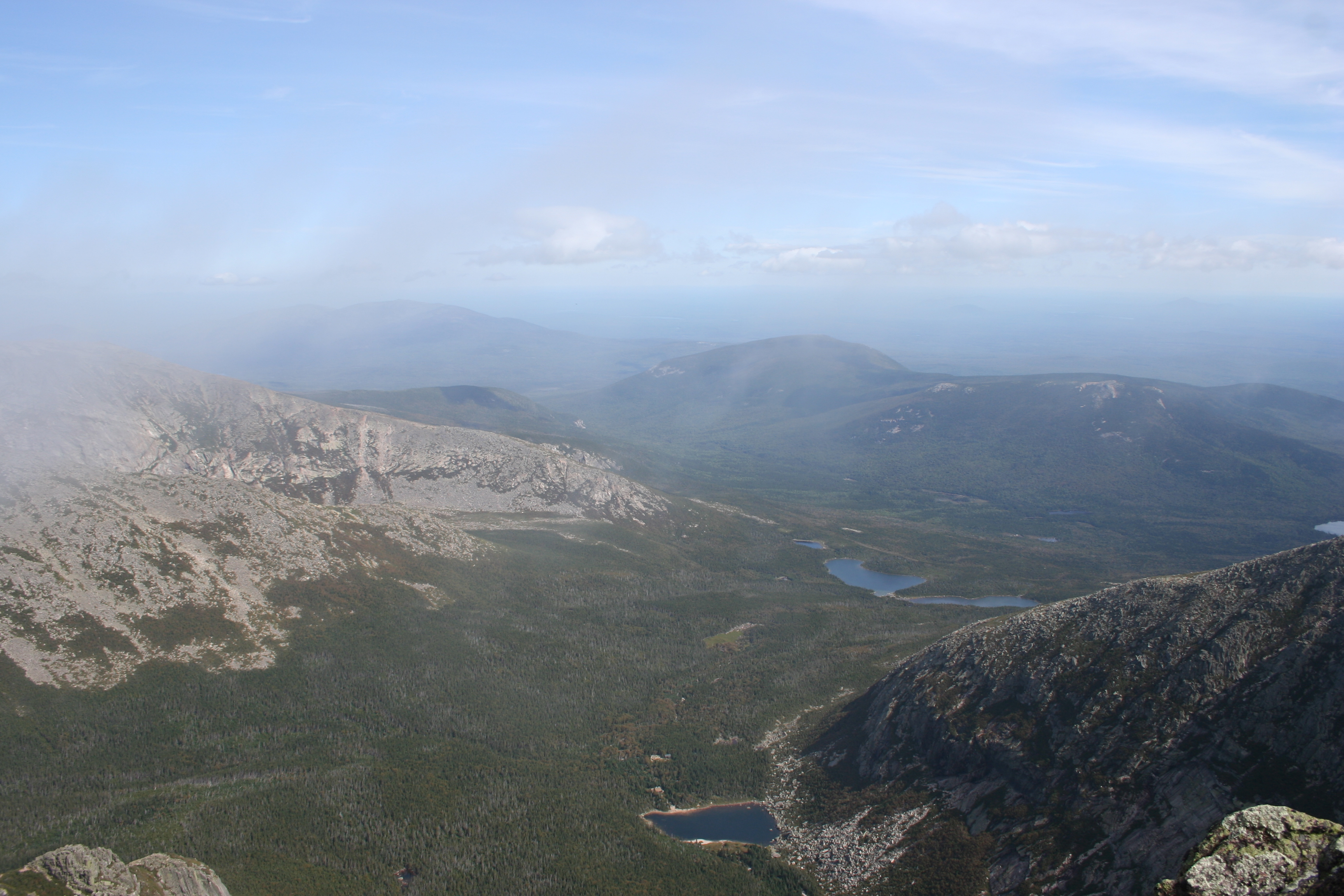
Looking toward the inner side of the cirque that is Katahdin. Summit photo.

Looking toward the inner side of the cirque that is Katahdin. Summit photo.

The Knife Edge

The Knife Edge

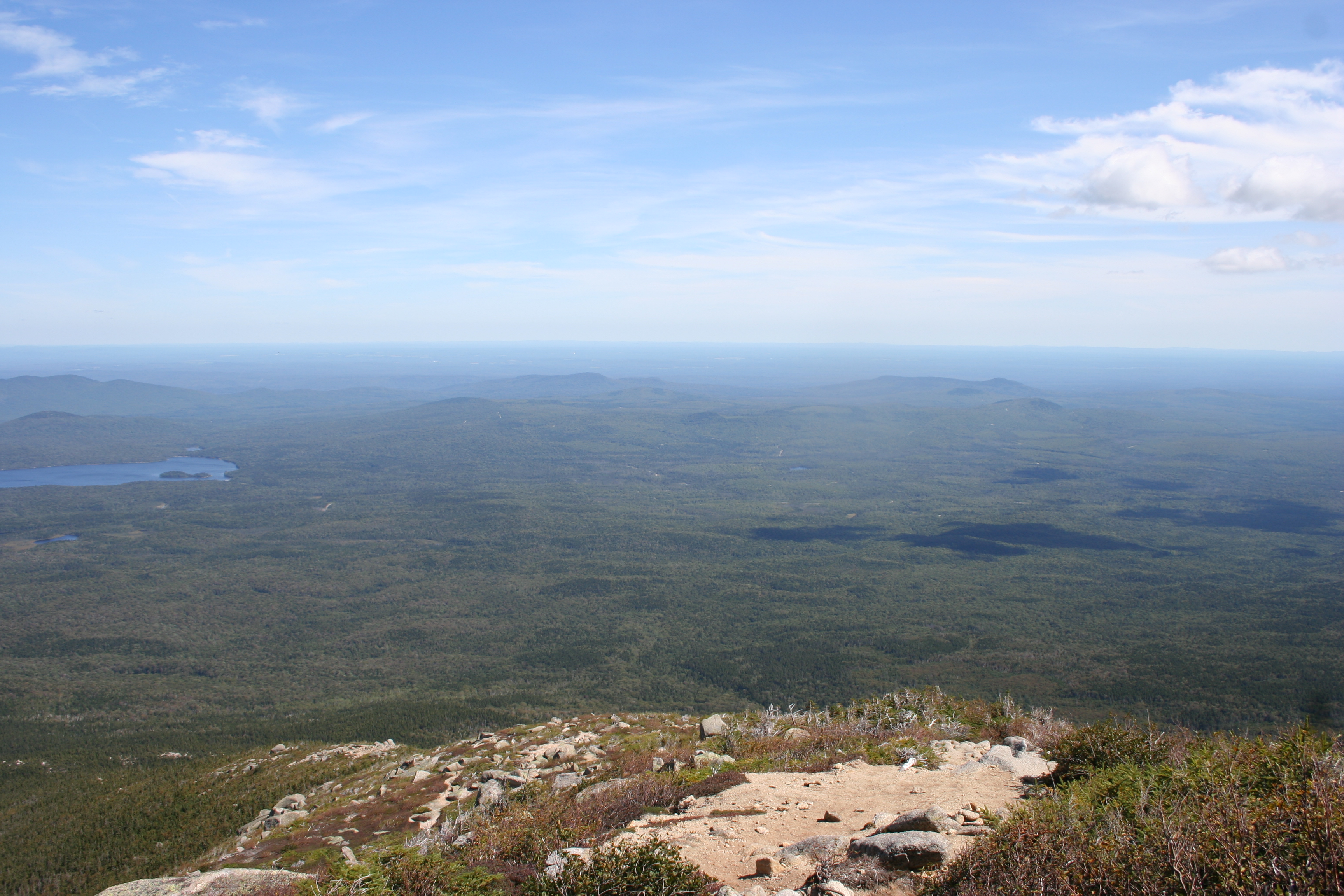
After The Knife Edge

After The Knife Edge

Descending the Helon (hee-lon) Taylor Trail

Descending the Helon (hee-lon) Taylor Trail

Six Gene Mutations Linked to Obesity

Six new gene mutations linked to obesity

WASHINGTON (Reuters) – At least six new gene mutations linked to obesity that point to ways the brain and nervous system control eating and metabolism have been identified, researchers reported Sunday.

Joel Hirschhorn at Children’s Hospital and Harvard Medical School in Boston led a team called Genetic Investigation of Anthropometric Traits, or GIANT, to screen 15 different studies of the entire human genetic map and pinpoint the six new genetic variations.

“Today’s findings are a major step forward in understanding how the human body regulates weight,” Dr. Alan Guttmacher, Acting director of the National Human Genome Research Institute, said in a statement.

“This study essentially doubles in one fell swoop the number of known and replicated genetic factors contributing to obesity as a public health problem,” added Dr. Kari Stefansson, Chief Executive Officer of DeCODE Genetics of Iceland, who led a team that made similar findings in a separate study.

The GIANT team found variations in six genes — TMEM18, KCTD15, GNPDA2, SH2B1, MTCH2 and NEGR1 — were strongly associated with the height-to-weight ratio known as body mass index (BMI).

“One of the most notable aspects of these discoveries is that most of these new risk factors are near genes that regulate processes in the brain,” added Stefansson, whose company hopes to sell genetic tests based on such discoveries.

“This suggests that as we work to develop better means of combating obesity, including using these discoveries as the first step in developing new drugs, we need to focus on the regulation of appetite at least as much as on the metabolic factors of how the body uses and stores energy,” Stefansson said.

“These new variants may point to valuable new drug targets,” he added.

Nearly one third of U.S. adults are considered obese, with a BMI of 30 or higher. Obesity is associated with more than 100,000 deaths each year in the U.S. population and trends are similar in many other countries.

“We know that environmental factors, such as diet, play a role in obesity, but this research further provides evidence that genetic variation plays a significant role in an individual’s predisposition to obesity,” said the genome institute’s Dr. Eric Green.

If there weren’t such a strong genetic factor, I would propse substituting obese with “unconcerned for my personal welfare, the welfare of those around me, living a life of quality, and frankly, life as a whole”.

These six newly discovered alleles strongly suggest predispositions to obesity. Of course, that was already known long, long, long ago. What wasn’t known was just how strong the genetic link was. In this case, 6 associated alleles is a surprisingly large number.

What’s tremendously important to note, however, is that we are not our genes. In very few cases is it overwhelmingly difficult to combat obesity – and in the majority of that minority, the cases are due to other, more serious diseases and genetic conditions. For most people, a healthy diet and regular excercise will combat the hell out of obesity.

Here’s something few obese people see in person.

Mount Katahdin

Mount Katahdin