Fun fact of the day

Evolution has no goals.

Take the Lenski experiments, for example.

Richard Lenski and his researchers followed several lineages of E. coli for 20 years (in fact, they’re still following them). They would freeze samples every 500 generations so they could go back and re-run the tape of evolution should some fundamental change occur. And, eventually, such change did occur. Some E. coli were able to consume a natural by-product of their environment after nearly 30,000 generations. Lenski et al. unfroze the old generations to see just what enabled the bacteria to obtain their new found skill. As it turned out, they had to go back many thousands of generations; it wasn’t just one mutation, but at least three. The first two were effectively random. But they were necessary in order to get to the third mutation – the one that opened up a new food product for the colonies. But in the re-running of the tape, not all lineages re-evolved the new mutations. They weren’t predestined to evolve a particular trait; nothing was inevitable.

And so it is with all of life. We are our genes, and how our genes are propagated via natural selection is not a goal-oriented process.

Cornelius Hunter struggles to understand convergent evolution

I was hunting around for some blogging ideas recently when I came across this post by Wintery Knight. It’s basically a copy and paste job because Mr. Knight is not qualified to speak of anything in biology (and he has amply demonstrated as much). However, the person he extensively quotes, Cornelius Hunter, is also 100% unqualified to analyze the world of biology. I’ve written about Hunter in the past.

As in his last post that just barely merited a response on FTSOS, Hunter makes a series of confused remarks about convergent evolution. (For those who don’t know – such as Hunter – convergent evolution is the process by which species of usually distant relatedness will acquire the same trait independent of their last common ancestor.) Let’s take a look at how Hunter mangles this:

The theory of evolution states that the species arose spontaneously, one from another via a pattern of common descent. This means the species should form an evolutionary tree, where species that share a recent common ancestor, such as two frog species, are highly similar, and species that share a distant common ancestor, such as humans and squids, are very different. But the species do not form such an evolutionary tree pattern. In fact this expectation has been violated so many times it is difficult to keep track. These violations are not rare or occasional anomalies, they are the rule.

Hunter is only leading into his mention of convergence here, but he’s already off to an embarrassing start. He’s attempting to claim that we don’t see an expected pattern of descent because that pattern is premised on the idea that similar traits must come from closely related organisms. He is factually incorrect. All he has described here is one method for determining relatedness between species: morphology. And even then, he has grossly over-simplified the process. For instance, take the skull of a dingo versus the skull of a Tasmanian tiger. They resemble each other quite closely, but they aren’t exactly the same. The latter has two holes in the roof of its mouth, a characteristic of marsupials. Go further and one will see that they also have different genetic codings.

Many examples are the repeated designs found in what, according to evolution, must be very distant species. Such evolutionary convergence is biology’s version of lightning striking twice. To explain this evolutionists must say that random mutations just happened to hit upon the same detailed, intricate design at different times, in different parts of the world, in different ecological niches, and so forth.

Were Hunter to take a peak at the genes in a Euphorbia, he might notice that they are markedly different from the genes in a cactus. That’s because, while both plants are prickly desert survivors, one is from the Malpighiales order whereas the other is from the Caryophyllales order. They have significantly different genotypes, but similar phenotypes. In other words, Hunter’s argument that random mutations are always hitting “upon the same detailed, intricate designs at different times, in different parts of the world, in different ecological niches” is not only verbose, but entirely wrong. It would be as though he said home builders have hit upon the same intricate design because some use cellulose insulation while others use spray foam. It’s the same result by a different means.

Everyone has heard of the kangaroo and its pouch. It is a marsupial—mammals that give birth at a relatively early stage in development, and then carry their young in a pouch. There are a great variety of marsupials that are curiously similar to a cousin placental species. The flying squirrel (a placental) and the flying phalanger (a marsupial) are one such example. Because of their reproductive differences evolutionists must say they are distantly related on the evolutionary tree. Yet they have strikingly similar designs which must have been created independently by random mutations. Every mutation leading to the two different species must, according to evolution, have been random (that is, independent of any need). No, natural selection doesn’t help.

First, his mutation argument is still wrong. Second, it isn’t merely reproductive differences that tell us the flying squirrels (which are two independent groups of rodents) are different from the flying phalanger. There is also evidence from their genetic relatedness, not to mention the obvious fact that one is placental and the other a marsupial. Third, of course natural selection is relevant here. That’s the whole reason two species are able to converge on the same solution to similar problems; natural selection has found an efficient solution to one problem faced by two species.

Though evolutionists sometimes deny biological convergence, it is a scientific fact.

I don’t know what Hunter is talking about, but that’s okay because I don’t think he does either.

He goes on to quote from a recent paper:

In mammals, hearing is dependent on three canonical processing stages: (i) an eardrum collecting sound, (ii) a middle ear impedance converter, and (iii) a cochlear frequency analyzer. Here, we show that some insects, such as rainforest katydids, possess equivalent biophysical mechanisms for auditory processing…

Thus, two phylogenetically remote organisms, katydids and mammals, have evolved a series of convergent solutions to common biophysical problems, despite their reliance on very different morphological substrates.

Now, remember the crux of Hunter’s opening: Similar morphology is the same thing as intricate design, thus Jesus. Yet here we see a “reliance on very different morphological substrates”. That is, natural selection in some insects has hit upon the same broad method for attaining hearing as it has in mammals, but it goes about the process in a largely different way, relying upon the insect phenotype it has already given itself. So not only is Hunter’s argument wrong from the get-go, but even if we’re generous and grant him his incorrect basis, he still gets blown out of the water. He has managed to somehow be wrong in his wrongness.

It’s one thing when someone branches into biology from time to time, relying upon the insight of others. We see that with Wintery Knight (the reason being that he hasn’t a clue about the field). We can’t expect everyone to be an expert, even if they should know better. However, Cornelius Hunter is another story. This is a guy who fancies himself qualified and reasoned, able to break down complex scientific ideas. Yet what we see is a man unable to even come remotely close to getting much of anything right about a relatively simple idea. And he keeps trying, getting things wrong every. single. time.

Datechguy does not grasp evolutionary theory

I mentioned a little while ago that the Internet became a better place when Roxeanne de Luca ceased her blogging activities. As it turns out, her old website is gone, but she is still blogging at some site called Datechguy. I don’t care to read anything she has to say given how uniformly uninformed she is on all issues (not to mention the fact that she is crazy), but I did poke around her new location. In doing so, I came across this atrocious piece by the owner of the blog, Datechguy himself:

I think people often confuse “natural selection” and survival and the fittest, which is certainly scientifically sound and full blown evolution the creation of one species from another.

The second has several problems the biggest of which for me is the math.

What makes this interesting is that Datechguy spent a good portion his post disowning creationist arguments, including young Earth creationism. In fact, he is a member of the Catholic Church, a group that claims to embrace the theory of evolution. (The reality is that the Church rejects what the theory actually says, but they still claim to embrace it, at least superficially.) So there is no reason one should expect him to go on about “the math” since that’s nothing more than code for common creationist canards. Yet here we are:

Here is what you need for evolution of that nature to work:

  • You need some kind of mutation.
  • Said mutation needs to be a beneficial mutation so it doesn’t increase the likely hood of the creature caught by a predator.
  • You need a mutation that doesn’t prevent breeding with a similar creature
  • The result of that breed must carry said mutation so it has to be dominant trait
  • Continual breeding has to take place so that dominant trait spreads until all members of the species without that dominant trait disappear.

I really should just point to The Blind Watchmaker and call it a day, but I’m a sucker for punching bags, so let’s get started. First Datechguy says mutations are necessary for speciation. This isn’t all that far off from the truth, but it isn’t exactly accurate. Mutations are going to happen – each one of us has about 150 in our DNA right now – but they are not entirely necessary. All that needs to happen for a speciation event is for enough time, space, and natural selection to take place. That is, natural selection is a honing process, so it is theoretically possible for it to promote some alleles while eliminating others in a way which prevents breeding between two populations that once were able to produce offspring.

The second point is myopic in nature. Datechguy appears to be implying that mutations are for the sake of prey. I never realized that predators and organisms without predators were not involved in evolution. But I digress. We see beneficial mutations all the time. For example, humans which began to utilize animal milk once we started to create civilizations had their lactase producing gene left on after childhood, thus enabling the break down of lactose. That legacy continues in many Europeans and those of European descent. Datechguy has not made a significant point here.

The third point is plainly weird. This guy is saying that for a speciation event to happen, a mutation cannot cause a breeding split within a population. That is false. As we see with human chromosome 2, one very plausible way that it spread throughout the population was that it separated our ancestors with 48 chromosomes from those with 46 chromosomes. That is, a small number of individuals had a mutation which prevented breeding with other members of their population. (It is worth noting, however, that many speciation events are merely a matter of time and the breeding is continuous. That is, a population may be considered one species at Point X, it continues to breed in a way which causes no distinct split (e.g., no division that is present in a single generation), then after, say, 100,000 years, it is considered a different species.)

The fourth point is another weird one. A mutation needs not be dominant to be carried throughout a population. If it did, Mendel never would have had green or wrinkly peas.

The final point – that “continual breeding has to take place so that dominant trait spreads until all members of the species without that dominant trait disappear” – is my favorite. Datechguy is arguing that fixation is necessary for speciation to occur. As we saw with the 2010 Burke paper, evolution still very much occurs with or without complete fixation. In fact, allelic fixation varies between sexually and asexually reproducing populations, so it is improper to speak of it in blanket terms.

The rest of Datechguy’s post is a mix of the Boeing 747 creationist canard and the creationist intelligent design irreducible complexity argument. For instance:

It doesn’t mean it can’t have happened. In theory I can roll snake eyes 50000 times straight

Or to put it another way, if you saw me roll snake eyes 10 times in a row, what would be the first logical thought? Luck or fixed dice? How about 100 times? How about 1000?

(That comes from the comment section on the post.)

It’s a common mistake to believe that any given trait or characteristic needs to evolve in either one giant leap or through a series of perfectly coordinated mutations. Fortunately, that isn’t how evolution works. Natural selection operates via incredibly tiny steps, one by one. When looked at over the course of hundreds of thousands of years or more, we have a huge number of mutations and allelic changes that appear impressive, but the reality is that virtually all of those changes were individually likely. And, just as importantly, each one of those changes is individually useful. (I’m ignoring historical contingency for the sake of brevity.) For instance, an eyespot won’t enable any creature to see danger or prey from miles away, but it is useful for detecting light and dark and, eventually, color, shape, and size.

I imagine Roxeanne and Datechguy will be very happy together at a site that, as with her last one, entirely lacks all scientific value.

Fun fact of the day

The term “junk DNA” is a misnomer. It refers to DNA that does not code for proteins – only about 2% of genes do that – buy it unfortunately implies a uselessness of certain DNA. That really isn’t what biologists mean when they use the phrase (or, rather, when others use the phrase; it has been out of vogue amongst professionals for some time now). All they mean is that we have DNA which appears to have no function. This makes sense in the light of evolution since natural selection wouldn’t necessarily be expected to select against useless DNA. After all, why not just leave it there? Unless it constitutes a substantial energy drain, it doesn’t matter.

However, new research is showing that much of our noncoding DNA does serve important functions. Namely, it regulates the genes that do produce proteins. There is still a substantial portion of the genome that appears to have no function, of course. Moreover, there is useless DNA out there that doesn’t code or regulate anything (microsatellites come to mind). However, we’ll all have to wait for further research before we really know the full nature of the human genome.

Good on you, Bill Nye. Good on you.

Bill Nye recently had this to say:

“I say to the grownups, ‘If you want to deny evolution and live in your world that’s completely inconsistent with everything we’ve observed in the universe that’s fine. But don’t make your kids do it,'” said Nye, best known as host of the educational TV series “Bill Nye the Science Guy.”…

“When you have a portion of the population that doesn’t believe in (evolution) it holds everybody back, really,” he said….

Nye said that while many adults may believe in creationism, children should be taught evolution in order to understand science. Absent a grasp of evolution, he said, “You’re just not going to get the right answers.” And he called evolution the “fundamental idea in all of life science, in all of biology.”

Teaching children the building blocks of science is essential for the country’s future, he added, saying, “We need them. We need scientifically literate voters and taxpayers for the future.”

Here is the video:

The genius of Charles Darwin

By the time that an animal had reached, after numberless generations, the deepest recesses, disuse will on this view have more or less perfectly obliterated its eyes, and natural selection will often have affected other changes, such as an increase in the length of antennae or palpi, as compensation for blindness.

The above quote comes from On the Origin of Species. It is just one of the numerous instances where Charles Darwin, on the basis of his theory, makes a wonderful prediction that comes true so many years after the fact. In this case, his prediction has been shown to be true over and over; species which have gone millions of years in the dark lose their eyesight again and again. We see this especially in many species of cave fish, but it isn’t limited to the oceans:

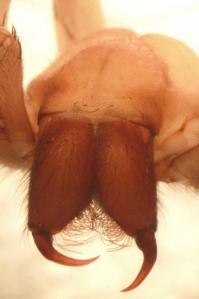
With a leg span of only six centimetres and a body size of around twelve millimetres, the spider Sinopoda scurion is certainly not one of the largest representatives of the huntsman spiders, which include more than 1100 species. However, it is the first of its kind in the world without any eyes.

“I found the spider in a cave in Laos, around 100 kilometres away from the famous Xe Bang Fai cave,” reports Peter Jäger, head of the arachnology section at the Senckenberg Research Institute in Frankfurt. “We already knew of spiders of this genus from other caves, but they always had eyes and complete pigmentation. Sinopoda scurion is the first huntsman spider without eyes.”

One prediction the theory of evolution allows us to make today that Darwin couldn’t make in his lifetime is that the genes for vision in these now-blind species should exist but be broken. If they do not exist, then either there is some really funky timeline and divergence activity (that is, these are old lineages that evolved before their sighted brethren) and we should see a lot of other genetic differences or evolution just isn’t true. Neither one of those options is very likely, of course. What we observe instead is that, indeed, the genes for vision are a broken, jumbled mess. That isn’t the case yet for the above spider because, as far as I know, no such studies have been carried out, but it is the case wherever else these sort of species have had their genes analyzed.

One point I think that needs to be made sure with Darwin’s quote here is this: Natural selection is unlikely to be the only factor in the disappearance of eyes among these species*. In fact, it could have little to nothing to do with the process at all. Vision in the dark is a useless thing, so natural selection may obliterate it for the sake of saving energy or preventing potential injury to a sensitive body part, but I believe it is much more likely that it simply did nothing. It neither selected for nor against vision. As a result of the lack of positive selection, mutation and genetic drift took over and vision in these species simply faded away.

*I really have two points here. First is the one I just made in the above paragraph. Second is the fact that Darwin was referencing natural selection in regard to it creating some compensation for blindness, not in regard to it directionally causing the blindness.

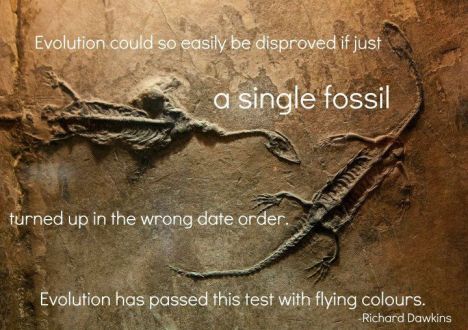
Not once

Where are all the pre-Cambrian primates anyway?

Chromosome 2

It has been proposed and well evidenced that human chromosome 2 is the result of a fusion event between two chromosomes in our evolutionary past. Briefly, here is the evidence:

All great apes except humans have 24 pairs of chromosomes. We only have 23. That means we need an explanation for such a difference that dates back only a relatively short period of time (5-7 million years). As it happens, human chromosome 2 shows strong evidence of being two fused chromosomes. The way we know this is that all chromosomes have telomeres and centromeres. Telomeres are repeating units of DNA that serve to protect the ends (and therefore middles) of chromosomes, sort of like a good pair of shoes and a strong helmet. Centromeres are DNA units located somewhere between the telomeres of chromosomes, generally relatively close to the center. Their function is to help assemble the two parts of a chromosome during cellular replication and reproduction. In human chromosome 2, we see that there are actually two telomeres fused together in the center. There are also telomeres on the end, but between each end and the center are centromeres. That means we have three telomeres (one of which is fused) and two centromeres.

I bring this up because I was recently reading yet another excellent post by The A-Unicornist and he was dealing with this stuff:

ID is really nothing but an argument from ignorance – it claims that certain things simply cannot be explained by science, so it must be ‘best explained’ by a designer instead. Take for example this post from The New Creationist. I often point creationists to the Ken Miller video where he explains the Chromosome-2 fusion in humans, because it’s a perfect example of the theory of evolution making a falsifiable prediction that ended up being powerful evidence that evolution is true – something that ID has never done and in principle cannot do, which is why it will never be a science. Now, this “new creationist”, who incidentally sounds just as credulous as the old ones, argues that such a fusion is impossible – that the chromosome should never have been able to fuse at all.

Being that I’m not a biologist, I have no idea how to directly refute what he’s arguing. But it’s conspicuously odd that rather than, I dunno, ask a biologist or two (like, golly I dunno, write a letter to Ken Miller?), he simply frames his argument as though the unanswered question itself creates a major problem for the theory of evolution.

Since I’ve used chromosome 2 as an argument for evolution, I am familiar with the creationist responses. As such, I want to address what the blogger known as The New Creationist is arguing:

If the fused chromosomes in an end-to-end fusion are ripped apart by the centromeres during cell division and cells must divide to produce an embryo then how does an embryo develop with two previously fused but now ripped apart chromosomes? We know that the loss of just one chromosome would be lethal and here we have the loss of both of the two
fused chromosomes. If fused chromosomes do not make it through cell division then how could a fused chromosomal configuration be a result of common descent since there would be no descendants by a biological pathway. Such would be miraculous. Indeed, I believe it is a miracle not only because it can not be explained by any natural pathway but also because it is contradicted by experimental data.

What he is trying to say (and what he later says a little more clearly) is that two centromeres would cause division and assembly to occur in two separate places. This would be an all around mess that would prevent not only mitosis, but meiosis as well. So what could the solution be? Well, he answers it himself:

Now, it has been proposed that the deactivation of one of the centromeres in the fused chromosome would prevent the rupture and subsequent loss of the newly formed fusion…

And that is the case. One of the centromeres has been deactivated. One possible reason for this could relate to the fact that the area near the deteriorated centromere (the pericentromeric sequences) has gone through a large number of duplication events, but this isn’t known and requires certain confirming evidence around other deactivated centromeres. I don’t know if any significant research has been done in this area since the 2006 paper about chromosome 2.

The New Creationist continues:

…but this poses another equally lethal problem during the pairing off of homologous chromosomes.

Let’s say that if C2A fused with C2B forming C2 (which has 2 centromeres) in the paternal germ line, the male’s sperm. Now, that sperm would have to fertilize an egg where both C2A and C2B not having been fused would have to pair off with the paternal C2 BUT if C2 has been prevented from being ripped apart because one of its centromeres has been deactivation then the corresponding maternal C2B (or C2A) will not combine with C2 in the mother’s egg because that centromere would have been deactivated.

In other words, he is saying that if two ancestral primates had offspring with the fused chromosome, then that offspring would have 23 chromosomes whereas the rest of the population still had 24. Mating between the two could not occur as a result, thus the fused chromosome could never make it beyond a single generation.

The most obvious solution to this problem is that several members of a population experienced a fusion event. It could have been a completely chance event, or it could have been due to a particular mutation that had spread down the line. That is, my money is on a mutation existing in a population that caused the fusion between two specific chromosomes. Perhaps all the pericentromeric duplications (which pre-date the fusion event, incidentally) gave rise to a gene that was free to mutate neutrally in the population. After some time, it managed to survive the generations, and made a marked difference. (That’s what has happened, minus the specific duplication events, with Richard Lenski’s E. coli.) Or maybe a mutation popped up just out of completely random chance, as opposed to being connected to any particular type of event. It’s hard to say just how any of this happened, but there are good hypotheses to be had on the question.

To conclude, the first argument presented here was defeated before it was even made. One of the two centromeres was deactivated long ago, as stated in the original paper. Indeed, that very paper even suggested a correlating factor in centromere deactivation that could be useful for future research. As for the second argument, I’m going to give Mike the last word:

[T]he fact that an explanation is either unknown or not immediately apparent would not refute the fact that the theory of evolution made this falsifiable prediction, nor would it suggest that there cannot be a rational explanation at all. Our new creationist seems to think that because he does not know how to explain it that a rational explanation is not merely unknown, but in principle impossible. Ergo, Goddidit. That ain’t how science works, kids.

Evolution, fruit flies, and counting

Don’t let any creationist tell you complex things don’t come from simple precursors:

US and Canadian researchers have evolved a population of fruitflies that can count. The result, presented on 9 July at the First Joint Congress on Evolutionary Biology in Ottawa, Canada, supports the notion that the neural mechanisms underlying basic arithmetic skills first emerged hundreds of millions of years ago. It could also eventually offer a key to understanding why some people have problems with numbers…

During a 20-minute training period, flies were exposed to either two, three or four flashes of light — two and four flashes coincided with a vigorous shake administered by placing a electric toothbrush next to the box containing the flies. After a brief rest, the flies were returned to box and shown the light flashes. Despite a dislike for being shaken, most of the flies were not able to learn to associate the negative stimulus with the number of flashes. But 40 generations later, they could.

The researchers caution that the work is preliminary and that they do yet know what genetic changes are behind the insects’ evolved number sense.

What I find interesting is exactly how this constitutes selection pressure. The flies certainly don’t like being shaken, but that’s entirely irrelevant if there isn’t some sort of reproductive advantage to be had from recognizing when the shaking will occur. Clearly there is, and we could speculate all day long as to why flies that associate the flashes with negative stimulus pass on more of their genes than the other flies, but I would like to see some experimental data showing the details. Does shaking disorient the flies? Does it interrupt the mating process? Does it affect fertility? Perhaps the paper that comes from all this can shed some light.

Now excuse me while I go murder the fruit flies that appear to have evolved to make my kitchen just awful for the past week.

Evolution does not stop

One thing I often hear regarding evolution is the notion that it can end. That is, I hear people make the claim that in one way or another, a species can (or has) reached a point where it will no longer evolve. This idea is generally applied exclusively to humans, but perhaps advocates would extend their arguments. I’m not sure. At any rate, it’s a surprisingly popular claim. Geneticist Steve Jones even made a version of it. He was speaking more of rates than anything, and I’m likely to chalk up his statements to hyperbole, but he did title one of his talks, “Human Evolution is Over.” Unfortunately for him, he’s wrong.

Evolution at its most basic is the transmission of genes from one organism to another. That isn’t to say individuals can evolve – they can’t – but broken down to its constituent parts, evolution is the flow of alleles from one vehicle (individual organism) to another. So long as that is occurring, evolution is occurring. To put it another way:

Evolution happens every single time an organism reproduces.

Evolutionary rates – generation time, mutational rate, environmental pressures, frequency of drift, etc – will vary from species to species and over great swaths of time, but they can never reach zero for any given population unless that population ceases to exist. At the point where members of the group no longer produce offspring is when evolution stops. It is literally the only time it can stop.

The fact is, evolutionary theory is the most integral part of the field of biology. The famous Theodosius Dobzhansky paper and now phrase, ‘Nothing in biology makes sense except in the light of evolution’, couldn’t be any more true; from the moment the first replicator evolved into something more, evolution has not once taken a break. So long as there is life, there is evolution.